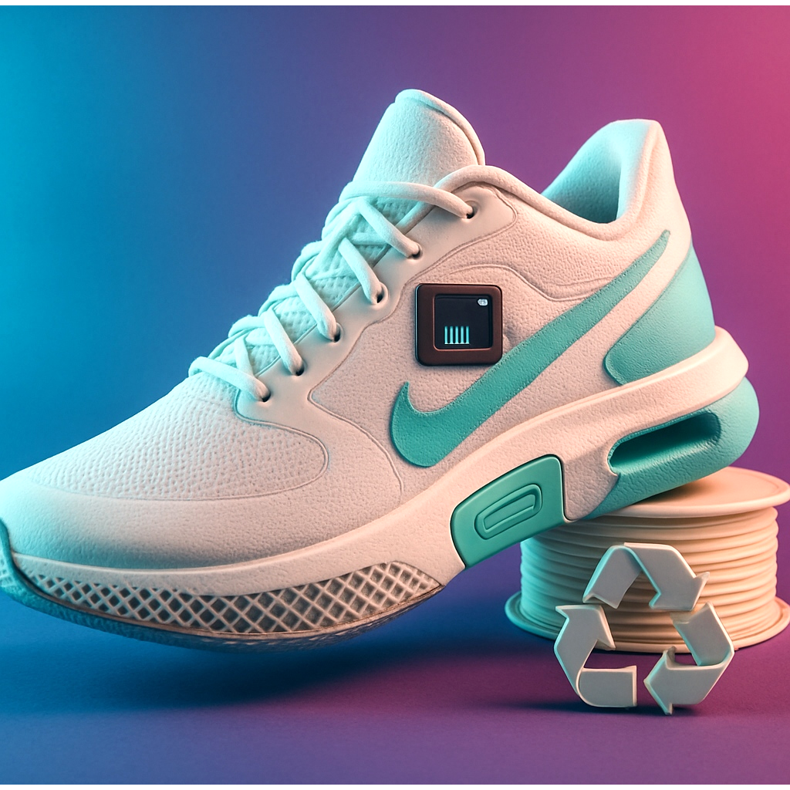
The history of sneakers - from sports footwear to a fashion icon
A fascinating history of sneakers from the 19th century to today. Discover the evolution from sports footwear to a fashion icon and a collector's item as valuable as a work of art.

The birth of sneakers - the end of the 19th and the beginning of the 20th century
The history of sneakers begins in the 19th century, when the process of rubber vulcanization (patented by Charles Goodyear in 1844) enabled the production of rubber soles. In 1892, the US Rubber Company introduced Keds, the first mass-produced rubber shoes with a canvas upper. The name 'sneakers' comes from the word 'sneak' (to sneak) - rubber soles allowed you to walk silently, unlike leather shoes with a hard sole. In 1917, Converse released the All Star - basketball shoes, which became a sports icon after the endorsement of basketball player Chuck Taylor in 1923. In the 1920s and 1930s, sneakers were strictly sports and recreational footwear, unacceptable in the formal space.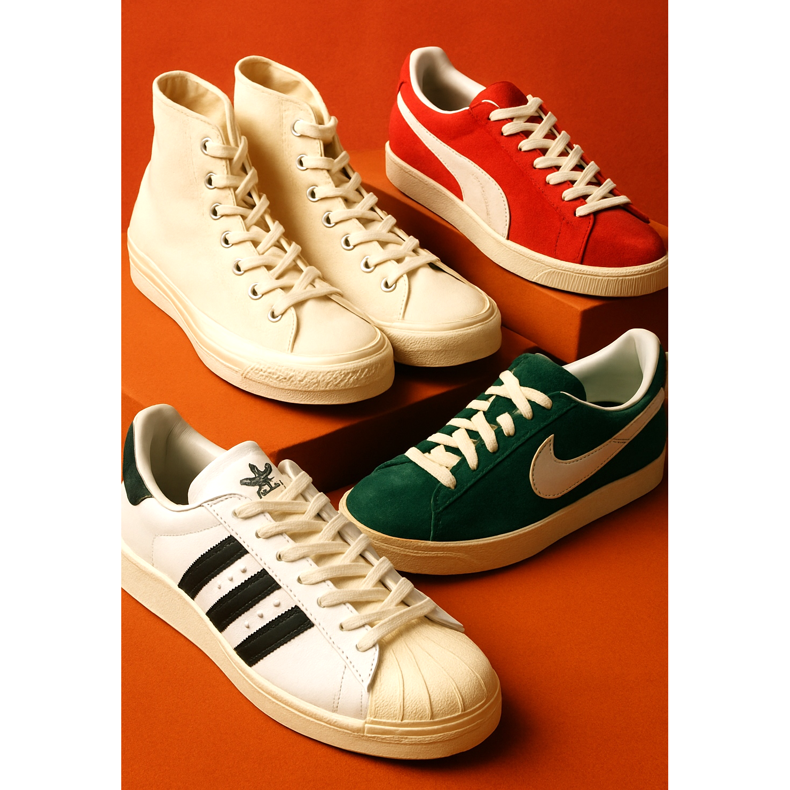
Cultural revolution - 1950s-70s.
The 1950s were the era when sneakers began to cross the boundaries of sports fields. James Dean wore white sneakers in the film Rebel Without a Cause (1955), making them a symbol of youth rebellion. In 1958, Adi Dassler founded Adidas and his brother Rudolf founded Puma - both companies revolutionized sports footwear. The 1960s and 1970s were a golden time for the development of sports technologies: Nike founded in 1964 (initially Blue Ribbon Sports), the introduction of the Air air cushion (1979), Adidas Superstar (1969) as a basketball shoe. Sneakers became an integral part of hip-hop culture in the 1970s, particularly the Adidas Superstar and Puma Suede, worn by pioneers of the genre in the Bronx.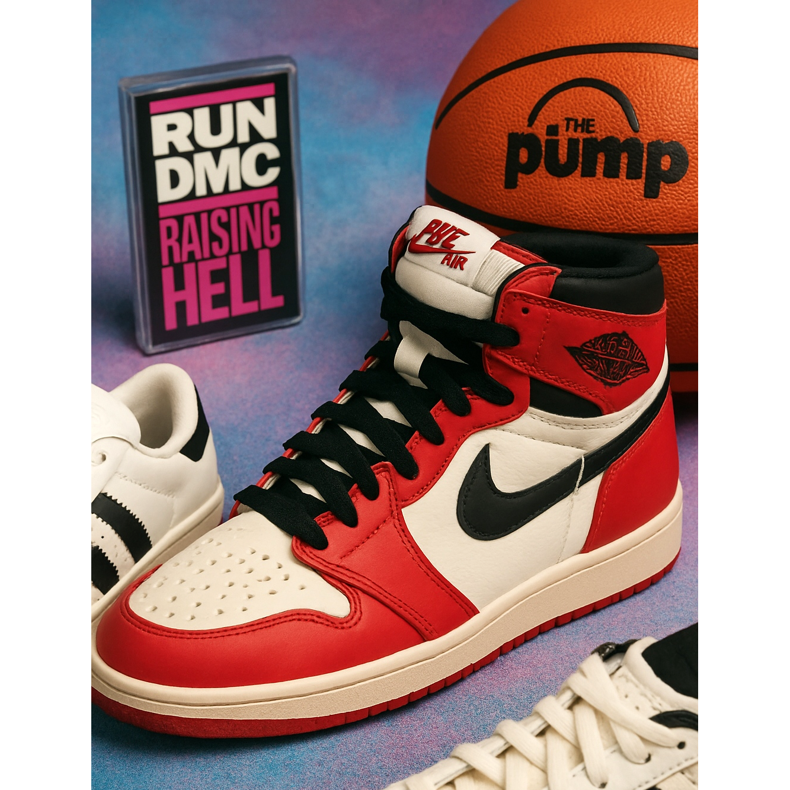
The golden era - the 1980s and the Air Jordan phenomenon
The 1980s was a decade that forever changed the status of sneakers in popular culture. Nike Air Jordan 1 (1985) - shoes created for Michael Jordan - caused a real revolution. The NBA initially banned them due to non-compliance with the color code, which only increased their popularity. Nike's collaboration with Michael Jordan set a precedent for brand collaborations with sports stars. Run-DMC recorded 'My Adidas' (1986), celebrating the Adidas Superstar as part of the hip-hop identity, which resulted in the first endorsement deal between a footwear brand and a hip-hop group. Reebok introduced Pump (1989) - shoes with a pump allowing for individual adjustment. Sneakers have become not just sports footwear, but a symbol of status, cultural affiliation and personal expression.
Mainstream and sneaker culture – 90s and 2000s.
The 1990s cemented the position of sneakers as an element of mainstream fashion. Nike Air Max line (especially Air Max 90, 95, 97) with a visible air cushion have become design icons. Vans and Converse dominated the skate and punk subculture, becoming symbols of the counterculture. Technology began to dominate - cushioning, stabilization, light synthetic materials. Basketball sneakers (Nike, Reebok, And1) reached the peak of popularity thanks to the NBA and streetball culture. The end of the 1990s was the beginning of sneaker culture - collecting, limited editions, reselling. The 2000s were the era of collaborations: luxury brands began to cooperate with sneaker manufacturers (Adidas x Yohji Yamamoto = Y-3 in 2003). Kanye West x Nike, later Kanye x Adidas (Yeezy from 2015) created a new category of luxury sneakers.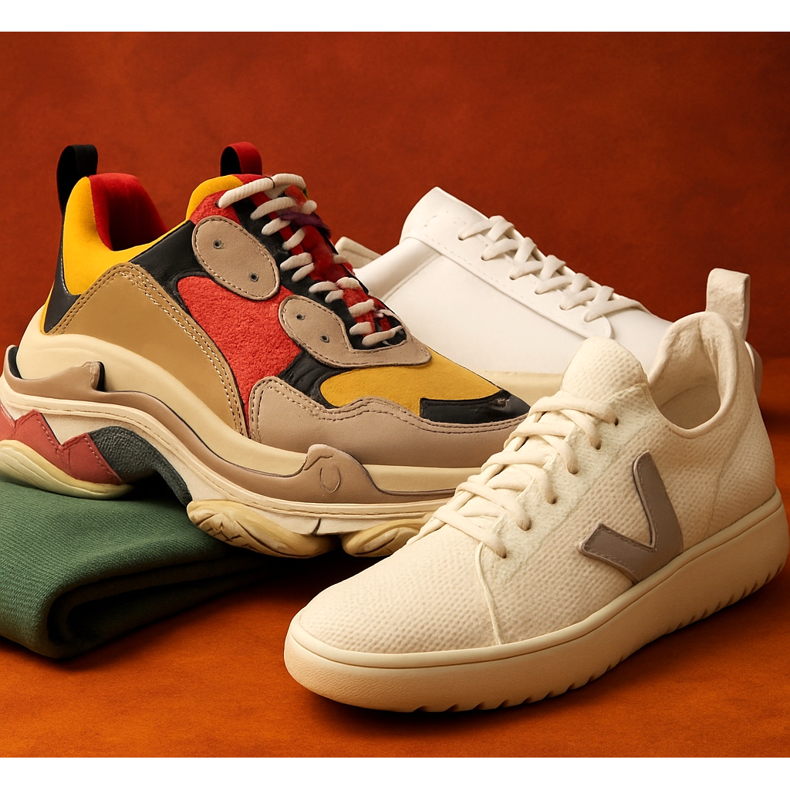
High fashion and sustainability – 2010s to today
The decade of 2010 was the moment when sneakers entered the world of high fashion for good. Collaborations with fashion houses (Balenciaga Triple S, Gucci Ace, Louis Vuitton Archlight) made sneakers cost as much as top-class formal shoes. Chunky sneakers dominated the catwalks and streets, redefining the concept of aesthetics. Minimalist white sneakers (Common Projects, Axel Arigato, Koio) have become the basis of the modern men's wardrobe - universal, elegant, versatile. Sustainability – growing ecological awareness has led brands to introduce sneakers made of recycled materials (Adidas x Parley, Allbirds, Veja). Reselling culture has reached astronomical proportions - limited models reach prices of thousands of dollars on the secondary market (StockX, GOAT). Sneakers have become an investment item and a collector's item like works of art.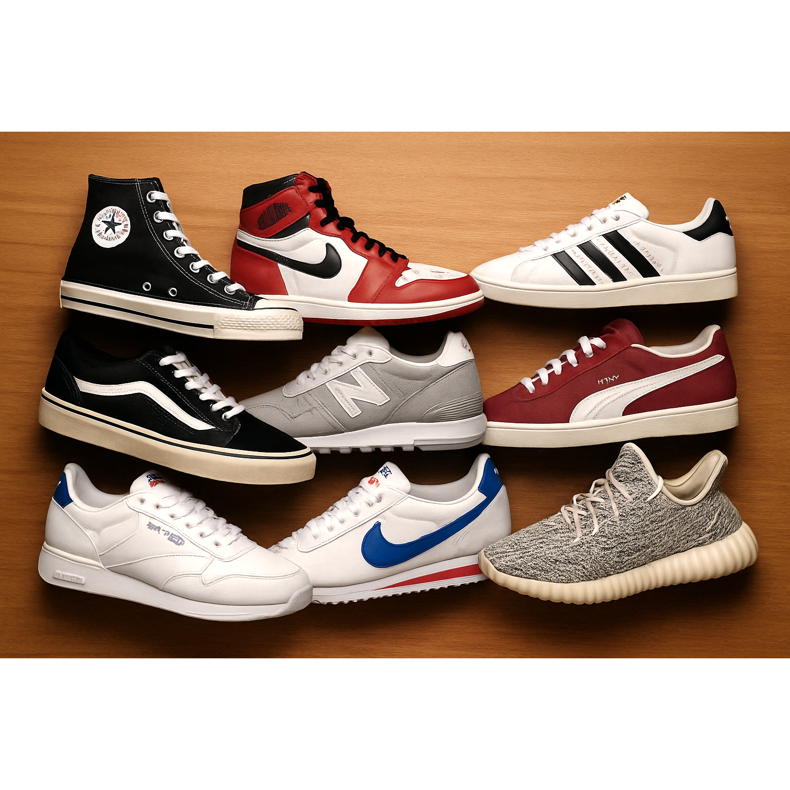
The most important models in the history of sneakers
The most iconic models in the history of sneakers are: Converse Chuck Taylor All Star - the longest-produced model, a symbol of timelessness. Nike Air Jordan 1 - an aesthetic and cultural revolution, the most desirable collector's model. Adidas Superstar – a transition from the pitch to the street, a symbol of hip-hop. Nike Air Max 1 (1987) – the first model with a visible Air cushion, the work of Tinker Hatfield. Vans Old Skool – an icon of skate culture. Reebok Classic Leather - minimalist elegance of the 80s. New Balance 990 - technology Made in the USA, iconic dad shoe. Puma Suede – a suede classic for breakdancing and b-boying. Nike Cortez - an iconic running shoe popularized by Forrest Gump. Yeezy Boost 350 – a modern sneaker hype phenomenon.