
The history of men's shoes - the evolution of style over the decades
From the elegant Oxfords of the Victorian era to today's chunky sneakers, men's shoes have undergone a fascinating evolution. Explore the history of men's footwear through the decades, discover the icons of each era and find out which trends have stood the test of time.
Why is the history of men's shoes fascinating?
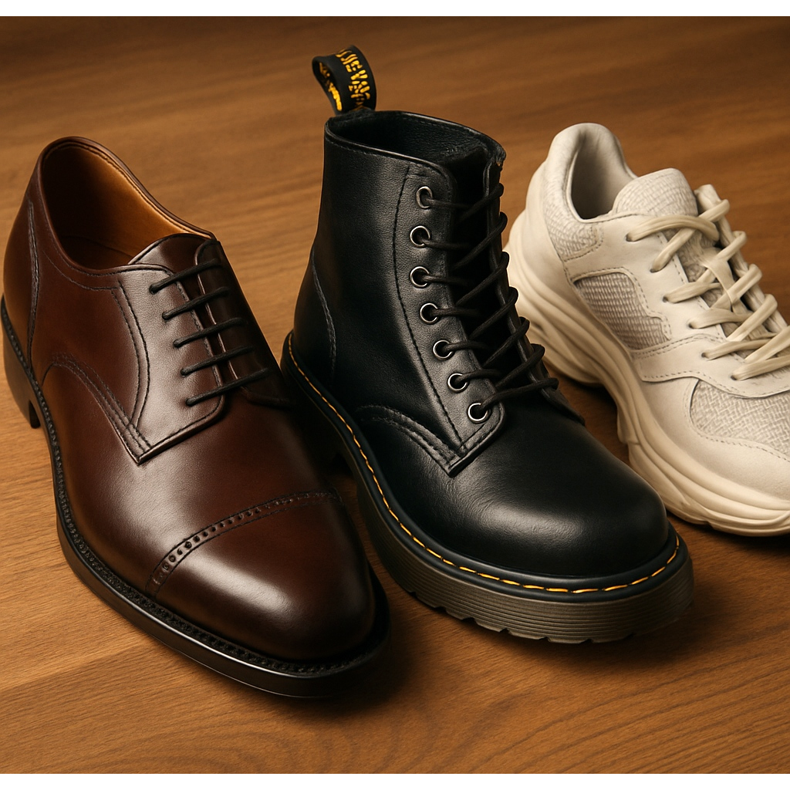
Men's fashion has undergone revolutionary changes for decades, and shoes have always been an integral part of it. From elegant Oxfords of the Victorian era, through rock Dr. Dr. Martens from the 1960s to today's chunky sneakers - each era had its iconic footwear.
Understanding the history of men's shoes is not only a lesson in fashion, but also discovering how society, culture and technology have shaped what we wear on our feet. Some trends come back after years, others remain in the past.
In this article, you will trace the evolution of men's footwear from the beginning of the 20th century to today and find out which classics have stood the test of time.
The beginning of the 20th century - elegance and formality
1900-1920: An era of elegance
During the Edwardian and First World War era, formal shoes dominated:
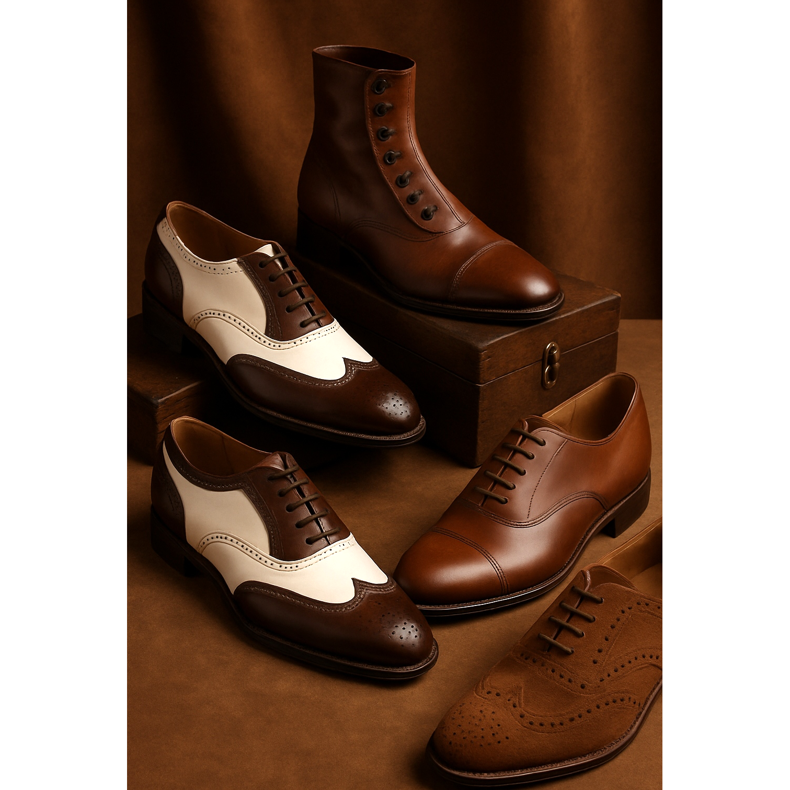
- Oxfords: The most formal, worn for any occasion
- Button boots: High ankle boots with buttons (gradually replaced by laces)
- Spectator Shoes: Two-color shoes (white-brown, white-black) - a symbol of elegance
- All shoes had high standards of workmanship - shoemaking craftsmanship was at the highest level.
1920s-1930s: The Jazz Age
The jazz era brought more freedom in fashion:
- Brogues: They became popular - the perforations added character
- Co-respondent shoes (spectators): Two-tone shoes of gangsters and dandies
- Loafers: The first moccasins appeared in the USA - inspired by Native American footwear
- Athletic shoes are starting to take off - sneakers, golf shoes
1940s and 1950s - war and post-war elegance
1940s: World War II
The war changed everything - rationing of materials limited production:
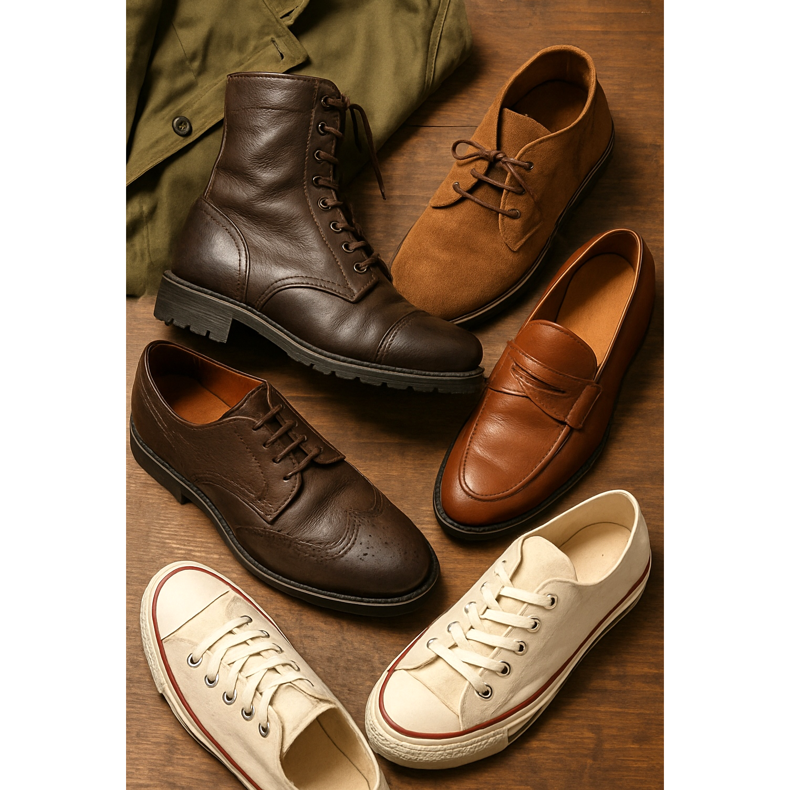
- Military boots: They dominated because of the war
- Derby: More practical than Oxfords - easier to put on
- Civilian shoes were simpler, without unnecessary decorations
1950s: Return to elegance
Post-war prosperity brought a return of sophistication:
- Penny loafers: They have become an icon of the ivy league and preppy style
- Desert boots (Clarks): Introduced in 1950 - simple, suede, comfortable
- wingtip brogues: Symbol of a businessman and professional
- Sneakers (Converse Chuck Taylor): They are starting to be worn outside of sports
The 1960s and 1970s - youth and subculture rebellion
1960s: Cultural Revolution
Young people began to rebel against formalities:
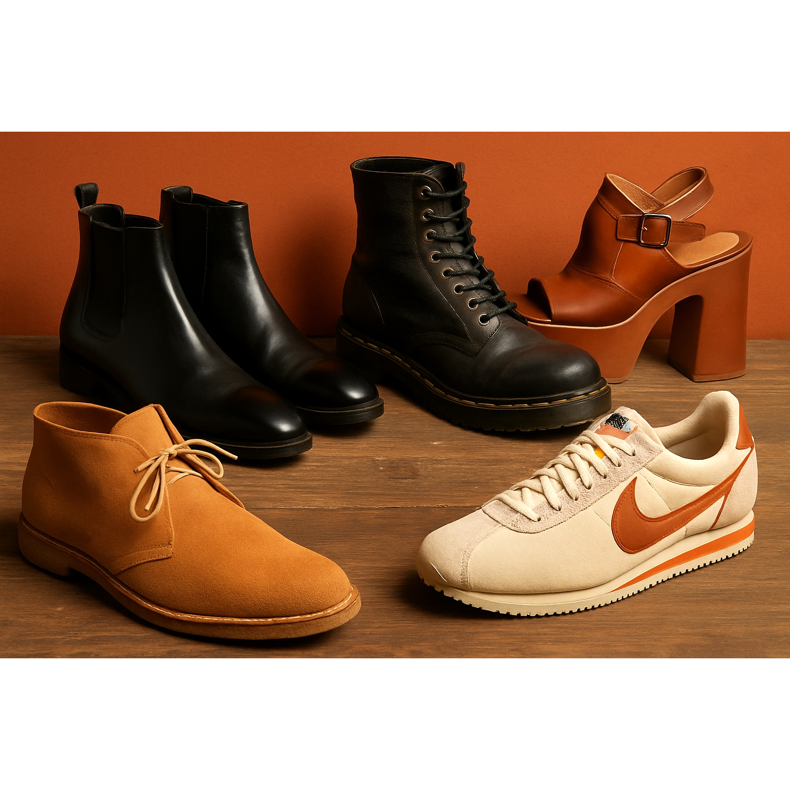
- Chelsea boots (Beatles boots): Popularized by The Beatles - elastic inserts, slim silhouette
- Dr. Martens (1960): Initially work shoes, they quickly became a symbol of subcultures (mods, punks, skinheads)
- Loafers: Continuation of the popularity of the 1950s.
- Suede desert boots: Casual elegance icon
1970s: Disco and punk
Two extremely different subcultures:
- Shoes platform: High disco-style platforms (today they are back as chunky shoes)
- Dr. Martens and combat boots: Symbol of the punk movement
- Nike Cortez (1972): The beginnings of the era of running shoes
- Sneakers are starting to dominate streetwear

1980s and 1990s - sneakers go mainstream
1980s: The era of yuppies and hip-hop
Two worlds: corporate elegance and street hip-hop:
- Oxfords and loafers: The return of formalities in business
- Air Jordan 1 (1985): A revolution in the world of sneakers - shoes have become a cult object
- Nike Air Max (1987): Air technology has changed the industry
- Reebok Freestyle: The popularity of aerobics influenced fashion
- Sneakers are no longer just sporty - they become a fashion statement
1990s: Grunge and minimalism
Era of contrasts:
- Doc Martens: Back as a symbol of grunge (Kurt Cobain)
- Timberland Boots: From construction sites to hip-hop and the streets
- Vans and skate shoes: Skateboard culture is becoming mainstream
- Minimalist sneakers: Nike Air Force 1, Adidas Superstar
- Chunky Sneakers: Buffalo platforms, Fila Disruptor
2000s and 2010s - the era of sneakers and smart casual
2000s: Metrosexual era
David Beckham and Daniel Craig define men's fashion:
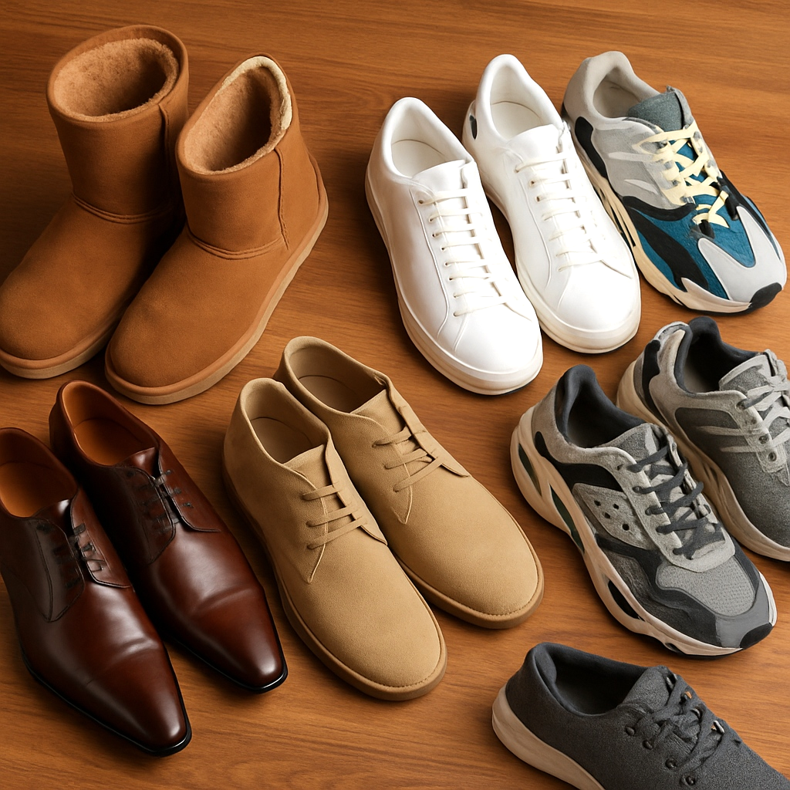
- Pointed-toe dress shoes: Very narrow, elongated formal shoes (today seen as excessive form)
- Premium sneakers: Common Projects Achilles Low (2004) - minimalism in luxury
- Ugg boots (men): A controversial trend
- Sneaker culture is growing - collecting, limited editions
2010s: Athleisure and streetwear domination
The lines between sports and casual are blurring:
- White minimalist sneakers: Stan Smith, Common Projects - everywhere and for everything
- Chelsea boots revival: Back as a symbol of smart casual
- Chukka boots: Casual elegance
- Yeezys (2015): Kanye West is changing the game - chunky sneakers are back
- Balenciaga Triple S (2017): Dad shoes / ugly sneakers as a trend
- Allbirds (2016): Sustainable fashion - woolen, ecological sneakers
2020s+ - comfort, sustainability, tech
2020-2025: Functionality, comfort and sustainability
The COVID-19 pandemic has changed priorities:
- Comfort first: Comfort is more important than ever - shoes for remote work
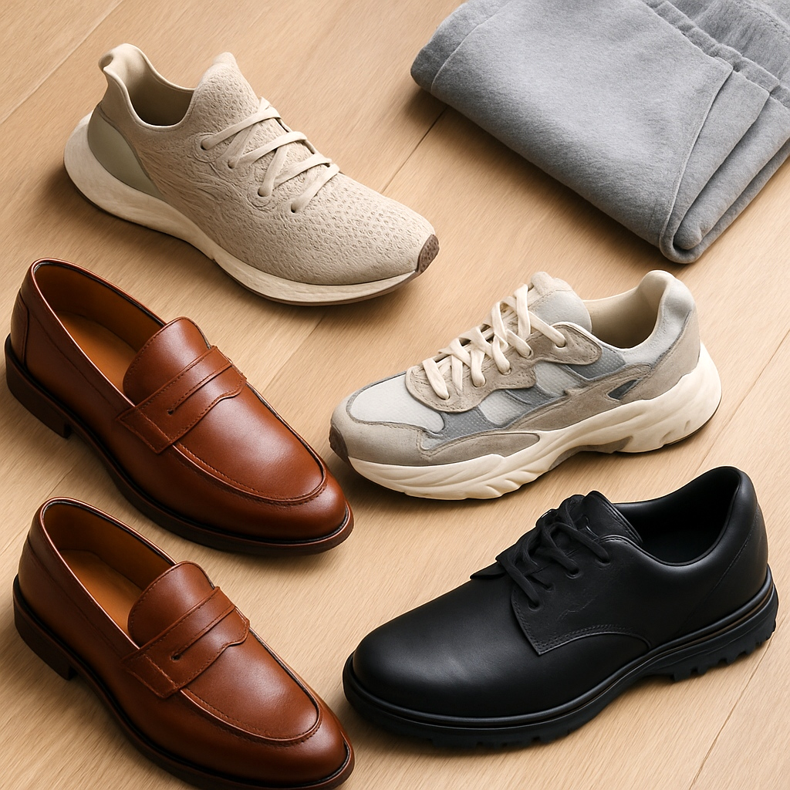
- Chunky Sneakers: Further development of the trend (Hoka, New Balance 550)
- Loafers revival: The return of loafers as an alternative to sneakers
- Sustainable footwear: Ecological materials, recycling, ethical production (Veja, Allbirds)
- Tech fabrics: Goretex, Primeknit, Flyknit - technology in the service of comfort
- Hybrids: Shoes combining formal and sports (sneaker-derby hybrids)
- Y2K revival: The return of the aesthetics of the 2000s (Salomon XT-6, Asics Gel-Kayano)
Summary
The history of men's shoes is a story of a changing society - from the stiff formality of the early 20th century, through the youth rebellion of the 1960s, to the contemporary dominance of sneakers and comfort.
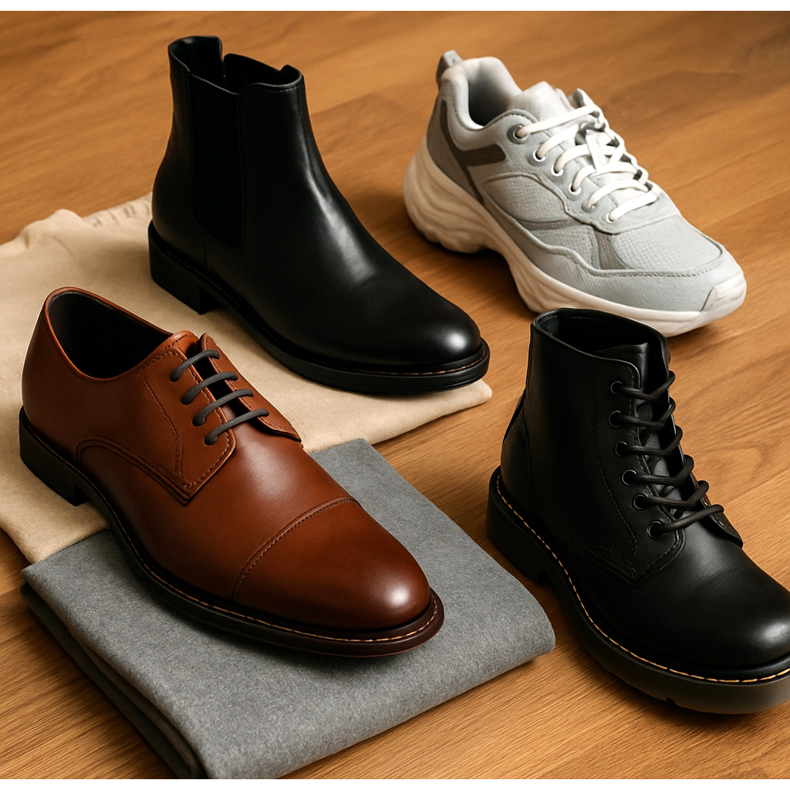
Some classics - Oxfords, loafers, Chelsea boots, Dr. Dr. Martens - They have lasted for decades and remain relevant. Other trends (pointed-toe shoes, platform disco shoes) are gone.
The future of men's shoes? Probably further development towards sustainability, technology and blurring the lines between formality and casual.