
Sustainable fashion in footwear – how to buy ecologically and consciously
Ecology enters the world of footwear fashion. Explore environmentally friendly materials, sustainable brands and how your purchasing choices can impact the planet. A practical guide to being a conscious footwear consumer.
Why sustainable footwear matters
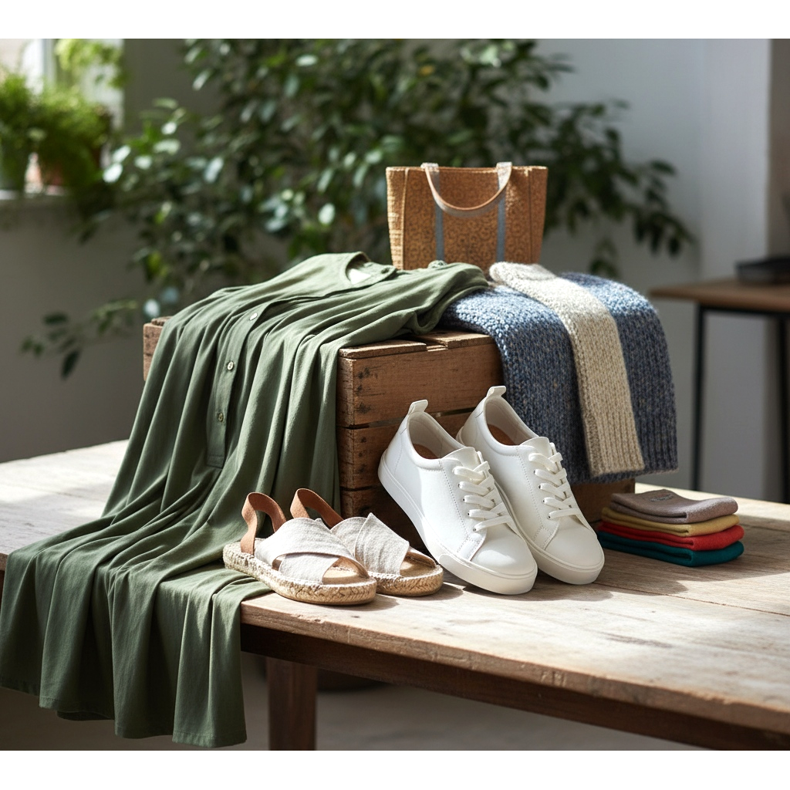
The footwear industry is one of the most environmentally burdensome economic sectors. The production of one pair of shoes generates an average of 14 kilograms of carbon dioxide, uses huge amounts of water and often uses chemicals that are harmful to ecosystems. Add to this the fact that most shoes end up in landfills after just a few seasons of use, and the scale of the problem becomes obvious.
The good news is that as consumers we have real power to change. Our purchasing choices influence what and how companies produce. The growing interest in sustainable fashion is already forcing changes on manufacturers - more and more brands are introducing ecological lines, transparently communicating their supply chain and investing in innovative, environmentally friendly materials.
Purchasing shoes consciously does not mean sacrificing style or comfort. Modern eco-friendly shoes are often as beautiful and comfortable as their conventional counterparts, and sometimes even better in quality. Rather, it's about changing our approach - buying less but better, taking care of what we have and choosing products with a smaller carbon footprint.
In this article, we will guide you through the world of sustainable footwear. You will learn what materials and certificates to pay attention to, how to extend the life of your shoes and how to make informed purchasing decisions without feeling guilty.
Ecological materials in footwear production
Material innovations are one of the most interesting areas of sustainable footwear fashion. Manufacturers are looking for alternatives to traditional, environmentally harmful raw materials, and the effects can be surprising.
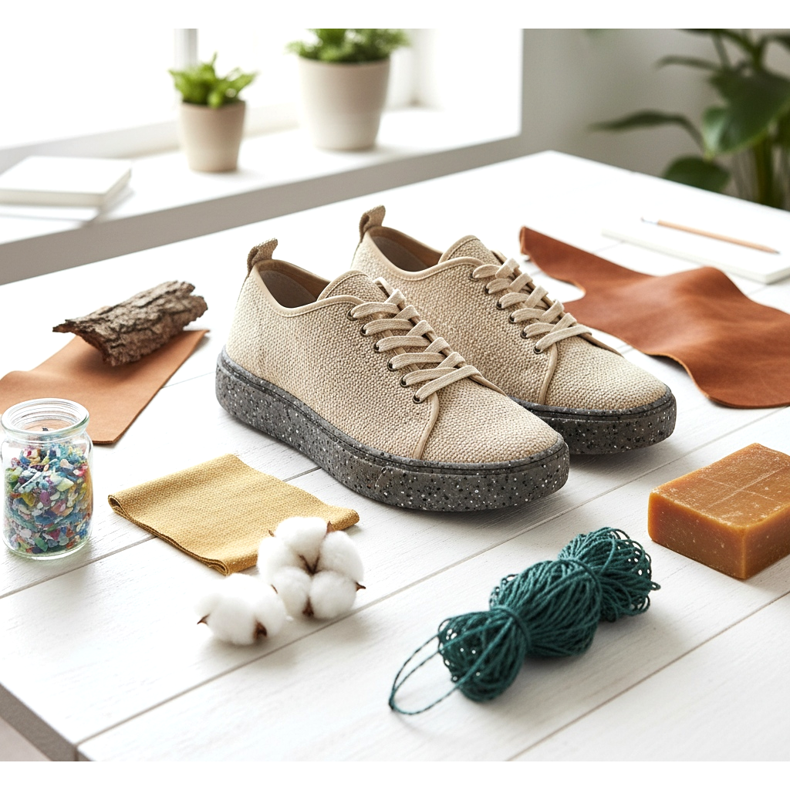
Vegetable tanned leather is an environmentally friendly alternative to traditional chrome tanning. Instead of toxic chromium salts, it uses natural tannins from the bark of oak, chestnut or mimosa. Such leather is biodegradable and safer for tannery workers. Shoes made of it are often even more durable than conventional ones.
Vegan leather has undergone a huge evolution. Not only plastic imitations, but advanced materials made of cork, pineapple (Pinatex), mushrooms (Mylo) and even apples. These innovative materials offer appearance and properties similar to leather, while being fully of plant origin.
Organic cotton in jackets and shoe linings is the standard of many ecological brands. Unlike conventional cotton, it is grown without synthetic pesticides and fertilizers, which reduces the burden on soil and water.
Recycled materials are gaining popularity. Soles made of recycled rubber, uppers made of recycled PET bottles, even fishing nets recovered from the oceans - these are examples of an innovative approach to the circular economy.
Natural rubber from certified plantations is an ecological alternative to synthetic soles. When grown responsibly, it supports local communities and contributes to maintaining natural tropical forests.
What to pay attention to when shopping – certificates and markings
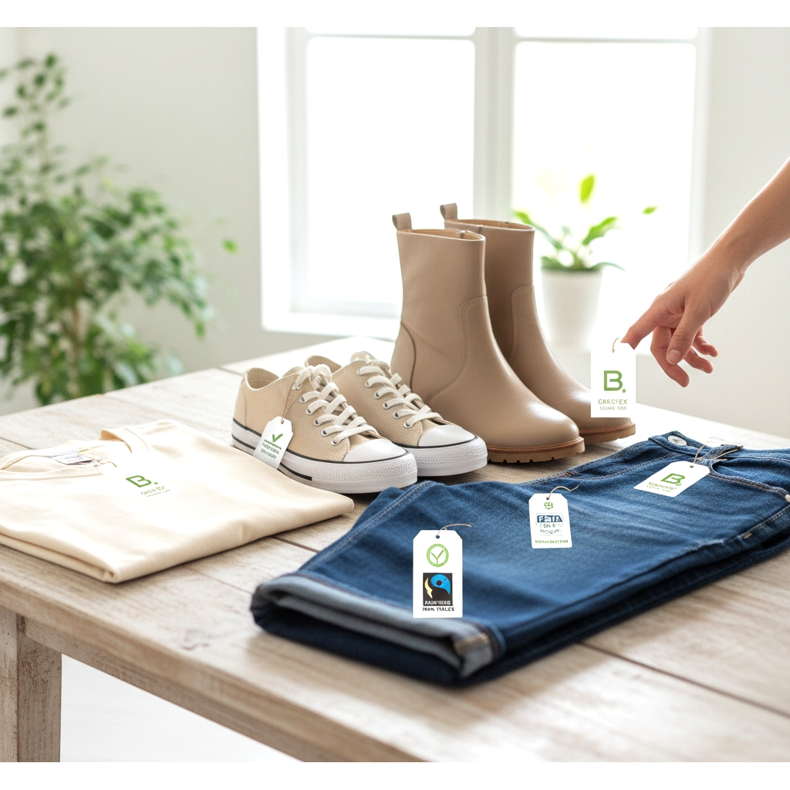
The sustainable fashion market can be confusing, and greenwashing - pretending to be eco-friendly - is a real phenomenon. Knowing reliable certificates and markings will help you separate truly ecological products from marketing tricks.
The OEKO-TEX Standard 100 certificate guarantees that the product has been tested for harmful substances and is safe for health. This is one of the most recognizable certificates in the textile and footwear industry.
The Leather Working Group (LWG) assesses tanneries for their environmental impact, including water, energy and waste management. Shoes made from leather from certified tanneries have a smaller environmental footprint.
PETA-Approved Vegan is a mark that guarantees that the product does not contain ingredients of animal origin. Useful for people looking for exclusively vegan footwear.
B Corp is a certificate for companies that meet high social and environmental standards. Brands with this certification are committed to transparency and accountability throughout the entire supply chain.
Fair Trade means fair working conditions and fair remuneration for employees. This is an important aspect of sustainable fashion that goes beyond just ecology.
Beware of general claims such as eco, green or nature-friendly without concrete evidence. Reliable brands provide detailed information about materials, production processes and certificates.
The principle of quality over quantity - buy less, but better
The most eco-friendly shoe is the one you don't have to buy. It sounds paradoxical, but the most effective strategy for a sustainable approach to footwear is to simply buy less. And when you do buy, choose things that will last a long time.
Cheap shoes lead to overconsumption. A low price is tempting, but it often means poor quality, short service life and ultimately more money spent on frequent replacements. Not to mention the environmental cost of producing and disposing of more pairs.
Investing in quality footwear pays off in the long run. Good shoes cost more initially, but after years of use they are often cheaper. At the same time, they look better, are more comfortable and give satisfaction.
Before each purchase, ask yourself: Do I really need it? Do I already have something similar? Will I wear this for at least 30 times? This final rule, known as #30wears, helps you avoid impulse purchases.
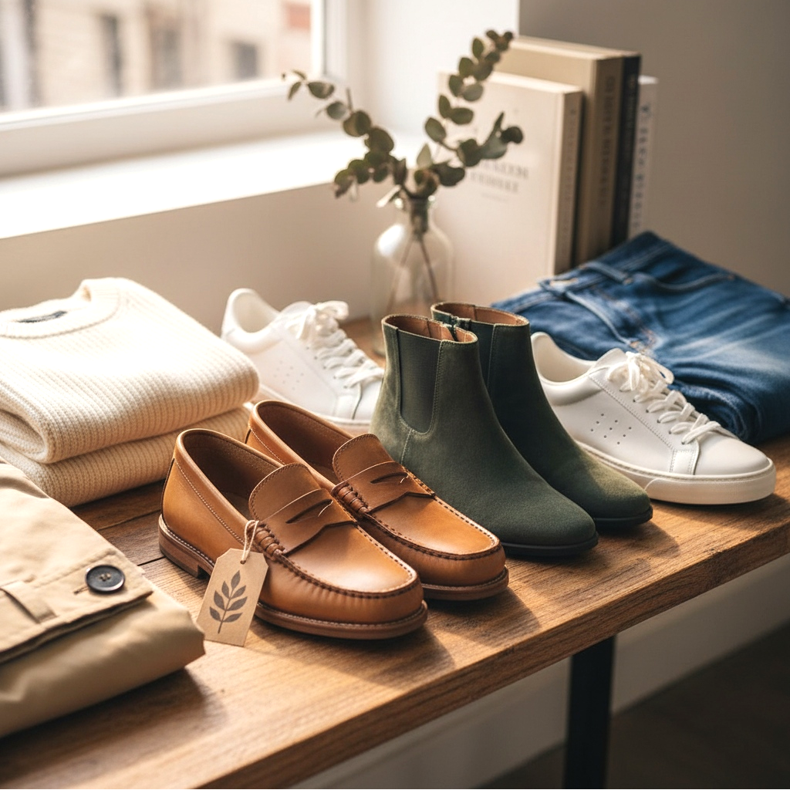
Choose classic, timeless models. Trends pass, but well-made shoes, elegant loafers or minimalist sneakers will never go out of fashion. It's an investment that pays off over the years.
Consider shopping second-hand. Second-hand shoes in good condition are an ecological option that gives a second life to existing products. Resale platforms and vintage stores often offer real gems at attractive prices.
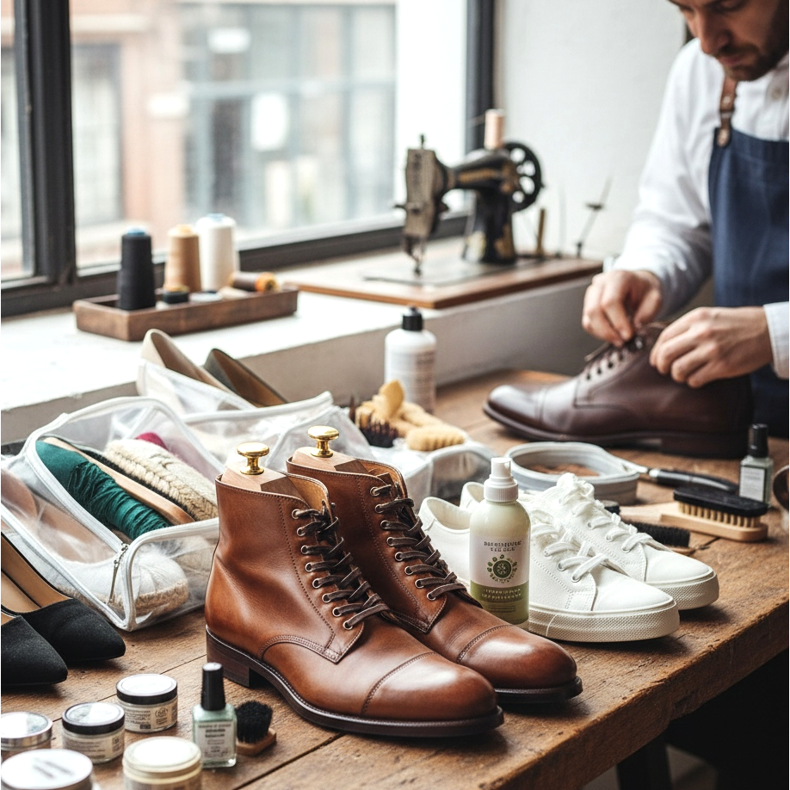
Extending the life of shoes - care and repairs
One of the easiest ways to be more sustainable when it comes to footwear is to extend the life of what you already have. Proper care and regular repairs can make your shoes last many times longer.
Regular cleaning and impregnation are essential. Dirt and moisture destroy materials faster than normal use. Spend a few minutes a week on shoe care - your shoes will reward you with a longer life.
Use shoe trees. These simple devices help maintain the shape of shoes and prevent kinks and crushing. Wooden trees also absorb moisture.
Rotate your shoes. Wearing the same pair every day doesn't give your shoes time to recover. If you have two or three pairs for everyday use and rotate them, each will last much longer.
Repair instead of throwing away. A shoemaker can replace soles, heels, zippers, and even repair stitched areas. The cost of repair is usually many times lower than a new pair, and the shoes can look like new after professional renovation.
Store your shoes properly. Away from direct sunlight, in a ventilated place, preferably in boxes or bags. Proper storage protects against deformation, drying out of the leather and loss of color.
Get to know the local shoemakers. Supporting local craftsmen is part of a sustainable lifestyle, and a good shoemaker can become your ally in keeping your shoes in perfect shape.
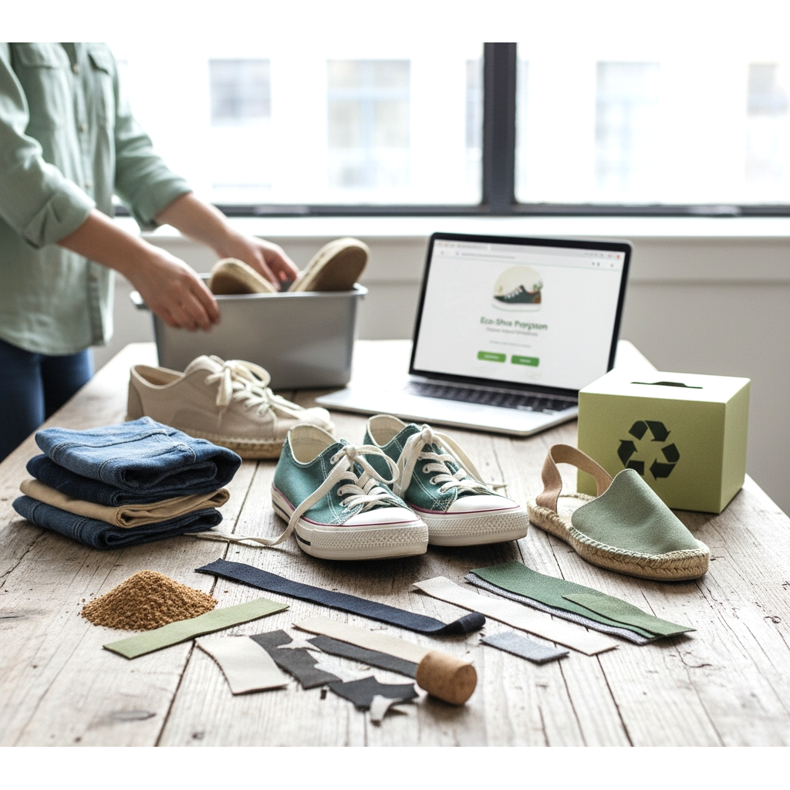
Dispose of shoes responsibly
Even the best-kept shoes eventually come to an end. Instead of throwing them into the regular trash, it is worth thinking about more responsible ways of disposing of used shoes.
Give away or sell shoes in good condition. Resale platforms, second-hand stores, charities - someone else can still benefit from them. This is the most ecological option because it extends the life of the product.
Look for shoe collection points. Many shoe chains and ecological organizations run take-back programs for old shoes. The collected footwear is sorted, repaired and given to those in need or recycled.
Some brands offer return programs. You can return old shoes of the same brand in exchange for a discount on new ones. This is a way to ensure that used footwear will be properly processed.
Shoe recycling is possible, although complicated. Shoes are made of many different materials that need to be separated. The processed elements can be used as raw material for the production of sports surfaces, mats or insulation.
Avoid throwing shoes into the regular trash. Shoes take decades to decompose in a landfill, releasing harmful substances into the soil. Even if you don't have access to specialized recycling, take the time to find a better option.
Remember that every small step matters. The unity of informed decisions by millions of consumers can transform an industry. Your choices when buying and disposing of shoes have a real impact on the planet - use this power wisely!