
Shoes for a graduate - first suit, first day in the office
Entering the labor market is an exciting moment that requires appropriate preparation - also in terms of footwear. Find out what shoes to choose for your first suit, how to build a professional image and which models will work well in various industries.
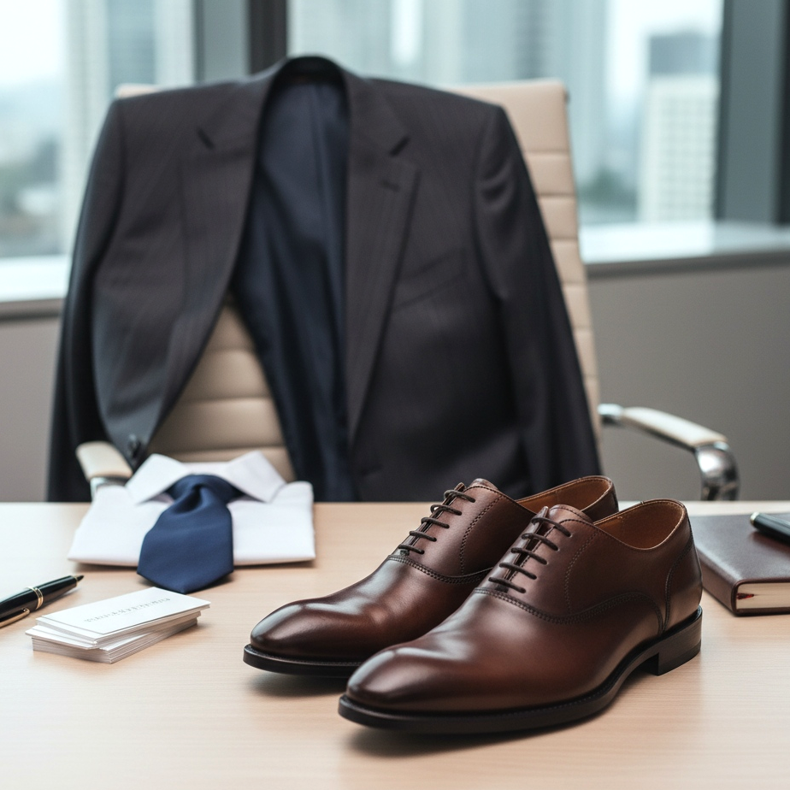
First steps in the world of business - why shoes matter
Completing studies and entering the job market is a breakthrough moment in the life of every young person. Suddenly you have to go from student casual to a professional wardrobe, and the first impression is crucial. And although it may seem surprising, shoes often say more about us than the rest of the outfit.
Recruiters and employers pay attention to details. Well-groomed, properly selected footwear shows professionalism, attention to detail and respect for the workplace. On the other hand, even the best-fitting suit will lose its effect if we combine it with ill-fitting or neglected shoes.
For a new graduate, choosing the right footwear can be a challenge. Student sneakers and sneakers suddenly turn out to be insufficient, and knowledge about elegant footwear is often limited. This guide will help you build a solid base of professional footwear without breaking your graduate budget.
Remember that investing in good shoes is an investment in your career. Quality, classic models will serve you for years and will accompany you during job interviews, first meetings with clients and important presentations. It's worth starting well.
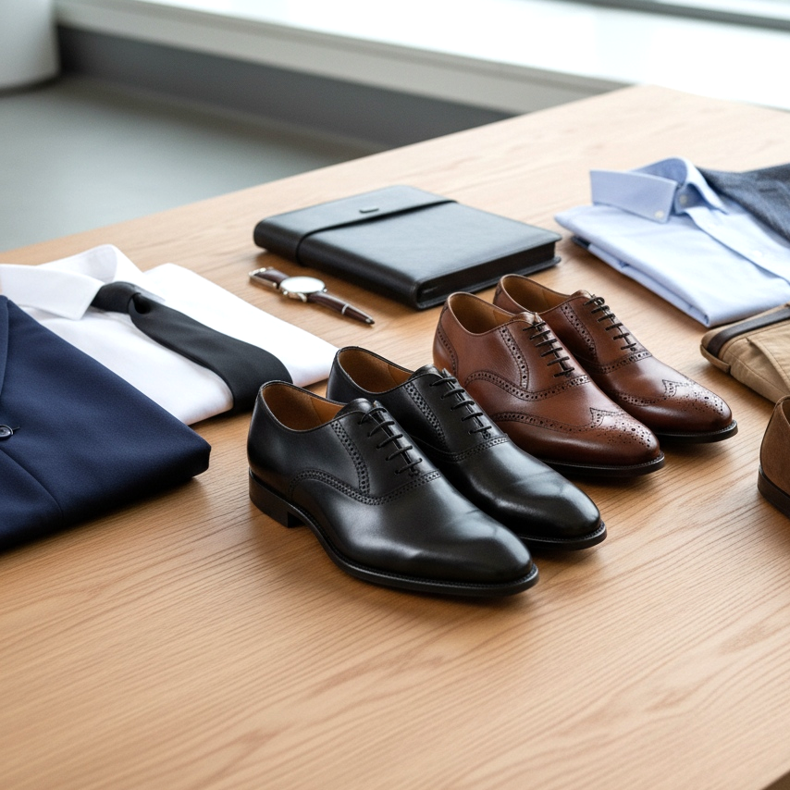
Classic men's shoes - the basis of a professional wardrobe
For men entering the labor market, classic shoes are the basis. These are footwear that will work well both during a job interview and in everyday office work. Choosing the right model depends on the industry and the level of formality of the workplace.
Oxfords are the most formal men's shoes. They are characterized by closed lacing, where flaps with eyelets are sewn under the front of the shoe. They are perfect for suits in corporations, law firms and for important business meetings. Black oxford shoes are an absolute classic that every man should have.
The Derby is a slightly less formal alternative with open lacing. The flaps are sewn on top of the front of the shoe, giving you more freedom and comfort. They work great in environments with a less stringent dress code - IT companies, creative agencies or startups. Brown derby shoes go perfectly with chino trousers and jackets.
Brogues are shoes with decorative perforation. They can be both oxford and derby. They add character to the style and work well in less formal offices. However, avoid them for very formal occasions and interviews in traditional industries.
Loafers, especially penny loafers, are a comfortable alternative for summer and less formal outfits. You can wear them with pants without a jacket, for team-building meetings or casual Fridays at the office. This is a good third pair for a graduate's wardrobe.
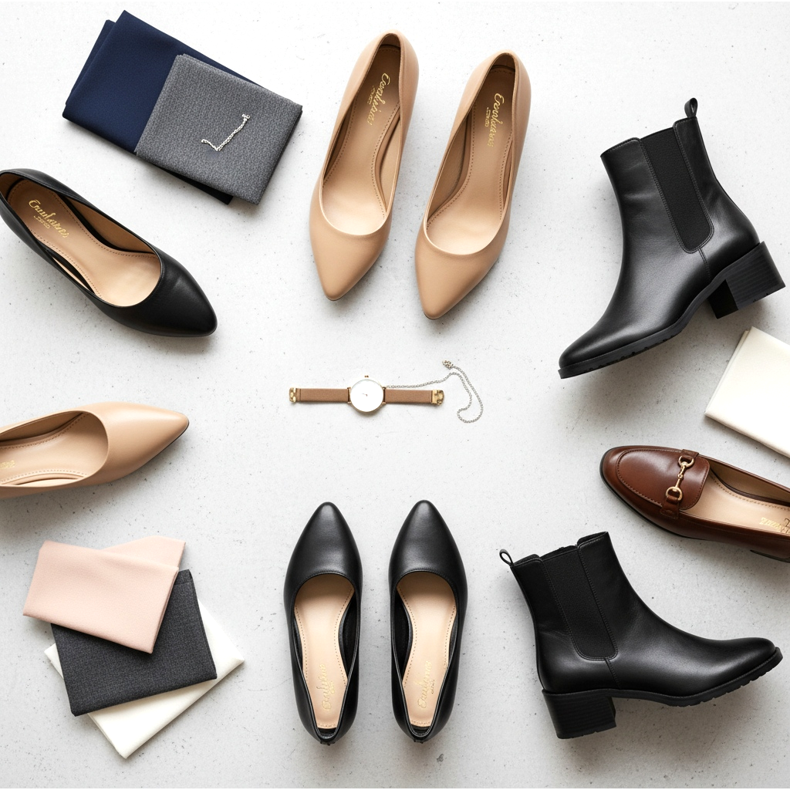
Elegant women's footwear - from pumps to smart casual
For women, choosing professional footwear is a bit more complex, but it also offers more options. Modern offices are usually less restrictive regarding women's dress codes, which allows for greater creativity. Still, some rules remain unchanged.
Medium-heeled pumps are a classic in a professional woman's wardrobe. The height of 5-7 centimeters ensures elegance without sacrificing comfort. Black pumps are an absolute must - they match everything and are perfect for any occasion, from a job interview to a client presentation.
Nude (nude) pumps are the second pair worth investing in. They optically lengthen the legs and match clothes of various colors. Choose a shade close to your skin tone for the best effect.
Ballet flats can be elegant if they are well made and subdued in color. Leather models in black or nude are perfect for less formal offices and for long days full of walking. However, avoid models with decorations, bows or bright colors.
Moccasins and lords are a fashionable alternative that is gaining popularity in corporations. They combine elegance with comfort and give the styling a modern character. Leather models in classic colors are perfect for offices with a smart casual dress code.
Elegant autumn and winter boots replace pumps in the colder months. Choose models with a classic cut, without too many decorations and with a comfortable heel. Black leather ankle boots are a safe choice for the office winter.
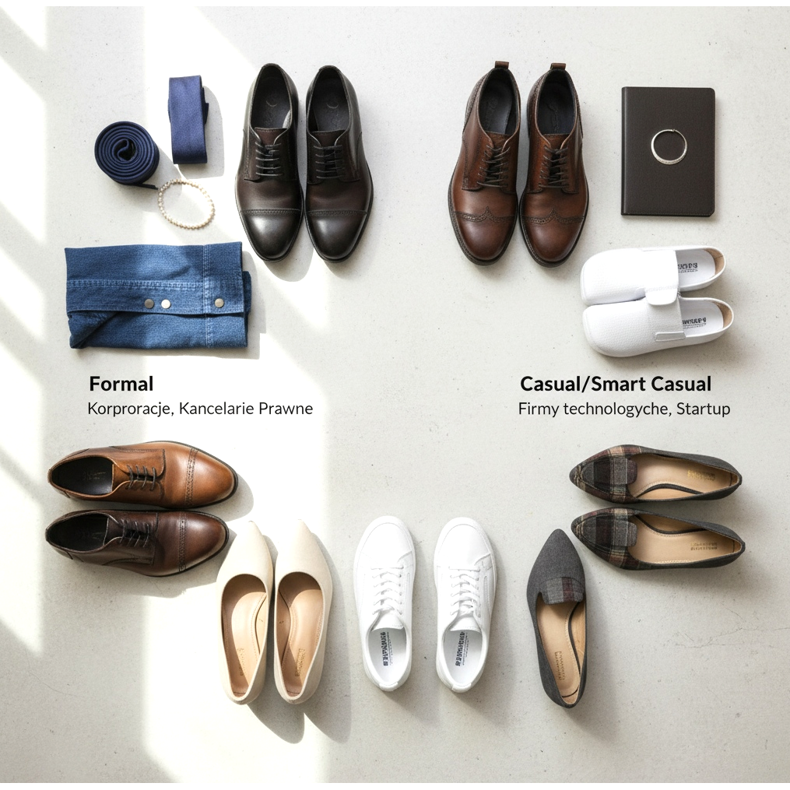
Dress code in various industries - from corporations to startups
Not every workplace requires the same level of formality. Before you invest in footwear, find out what the dress code is in the company you are applying to or where you already work. This will help you avoid both excessive elegance and mismatch.
Financial corporations, law firms and consulting firms usually require formal attire. For men, this means oxfords or elegant derby shoes in black or dark brown. Ladies should choose classic high-heeled pumps. Avoid too fashionable or original models - traditional elegance counts here.
Technology companies, creative agencies and startups often have a relaxed dress code. You can afford brogues, loafers and even elegant sneakers. Ladies can wear ballet flats, lords or flat shoes. Cleanliness and well-groomed appearance are important, not necessarily formality.
Manufacturing and engineering companies often require practical, sometimes even specialized footwear. Find out about occupational health and safety requirements and match your footwear to the working conditions. However, you may need a more elegant pair for meetings with clients or in the office.
The medical and pharmaceutical industries usually have specific requirements regarding footwear for reasons of hygiene and safety. However, there is a standard dress code in offices - elegant shoes for men and pumps or ballet flats for women.
If you're not sure what rule to follow, go to the interview in slightly more formal attire than you think is necessary. Better to be a little overdressed than underdressed. Also observe how the employees of the company you are applying to dress.
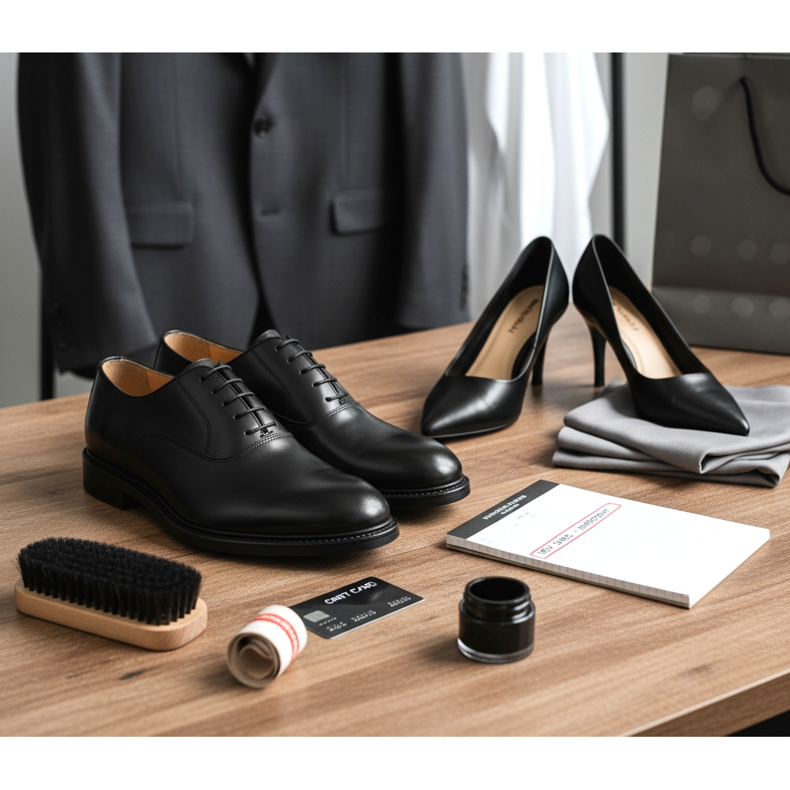
Quality vs. price – wise investments with a limited budget
A graduate's budget rarely allows for the purchase of the most expensive shoes. However, this doesn't mean you have to sacrifice quality. The key is to plan your purchases wisely and know what to look for.
Materials should be a priority. Natural leather will always be better than artificial leather - it is more durable, breathable and acquires character over time. If you have to save money, it is better to buy one pair of leather shoes than two pairs of plastic ones.
Pay attention to the construction. Good shoes have reinforced stitching, a solid sole and carefully finished details. Check that the seams are even, the sole is firmly attached and the finish leaves nothing to be desired.
Start with the basics. Instead of buying five pairs at once, invest in one or two really good ones. Black classic shoes or pumps are an absolute base and will work in 80% of situations. You can buy additional pairs gradually.
Take advantage of sales and outlets. Shoes from previous seasons can often be purchased much cheaper, and classic models never go out of fashion. However, beware of suspiciously low prices - if something seems too cheap, it is probably of poor quality.
Remember about care. Good shoes, with proper care, can last for years. Regular cleaning, impregnation and use of shoe trees significantly extend the life of shoes. It's an investment that pays off.
Practical advice for starting your career
Choosing shoes is just the beginning. A few practical tips will help you present yourself professionally from the first day in your new job.
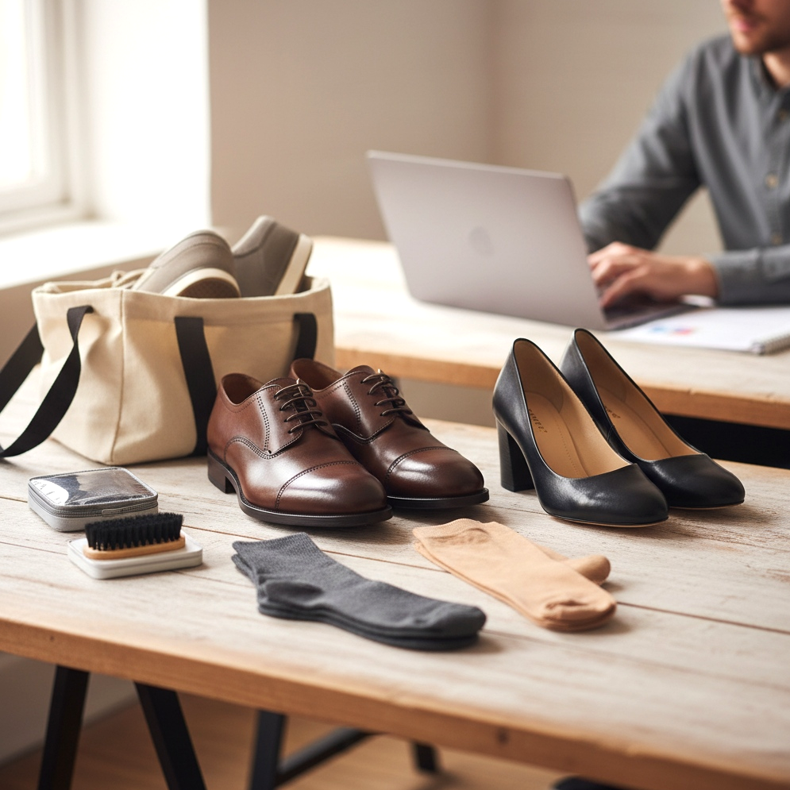
Deliver your shoes before important occasions. New shoes, even the most comfortable ones, can cause abrasions. Before a job interview or your first day at work, wear your new shoes around the house for a few days. You will avoid unpleasant surprises at key moments.
Keep your shoes clean. Before each important meeting, check the condition of your shoes. Clean the dust, refresh with paste, remove any stains. Well-kept shoes show your attention to detail.
Keep a spare pair in the office. If you commute to work by public transport or by bike, it's a good idea to have smart shoes in your desk drawer. You can come in more comfortable shoes and change on-site.
Invest in good socks or tights. Even the best shoes won't look good with mismatched socks. Men should choose classic, dark socks reaching to mid-calf. Ladies can choose between tights and socks, depending on the footwear and the occasion.
Watch and learn. Pay attention to how respected colleagues dress. This will give you some guidance on acceptable style in your company. It's not about blind imitation, but about understanding the applicable codes.
Remember that building a professional wardrobe is a process. You don't have to have everything at once. Start with the basics, gradually expand your collection and always choose quality over quantity. Your shoes are the foundation of your professional image - let them support you on your career path!