
Orthopedic flip-flops - how to take care of your feet in the summer?
Flip-flops are comfortable summer footwear, but the wrong choice can lead to foot pain, abrasions and orthopedic problems. Learn how to choose flip-flops with arch support, what materials are best for leg health, and how to avoid common problems associated with wearing this popular footwear.
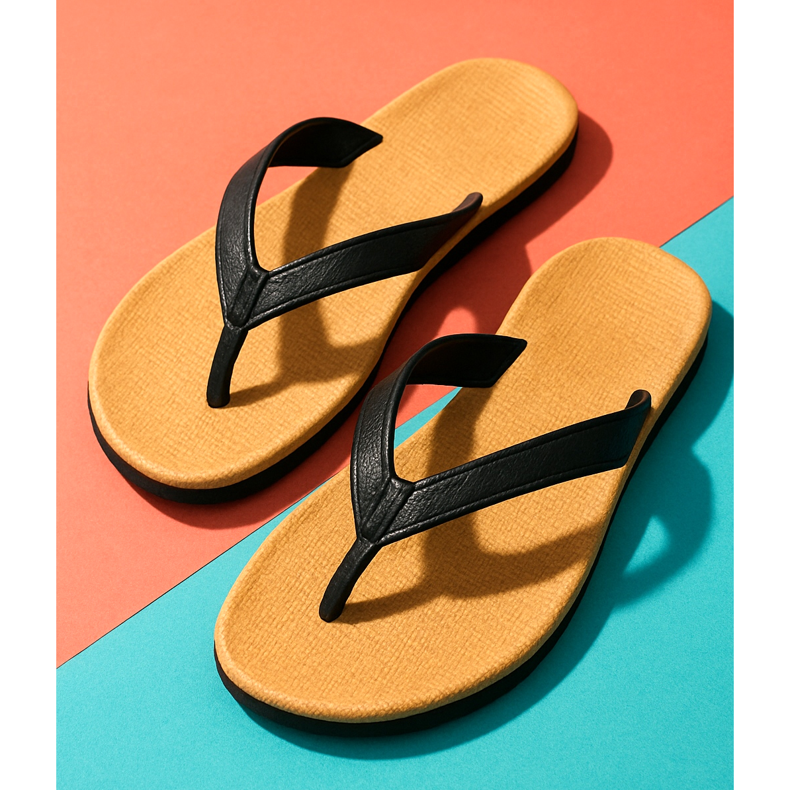
Why do most flip-flops harm your feet?
Classic, flat flip-flops for a few zlotys from the supermarket are one of the worst choices for the health of your feet. A completely flat sole without arch support causes the foot to work in an unnatural way, which may lead to:
- Plantar fasciitis
- Heel and metatarsal pain
- Overload of the knee joints
- Spine problems
- Hammertoes
The narrow strap between the toes forces them to constantly strain to keep the shoe on the foot, which leads to muscle fatigue and deformation. If you wear flip-flops every day throughout the summer, your feet may "remember" these abnormal patterns.
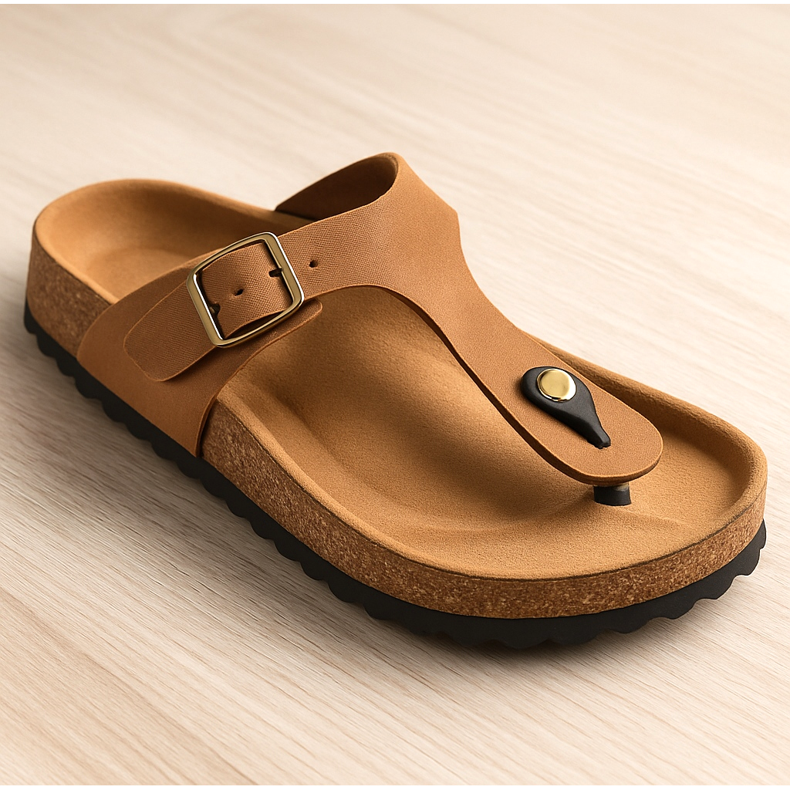
What should you pay attention to when choosing healthy flip-flops?
For flip-flops to be friendly to your feet, they should meet several key criteria:
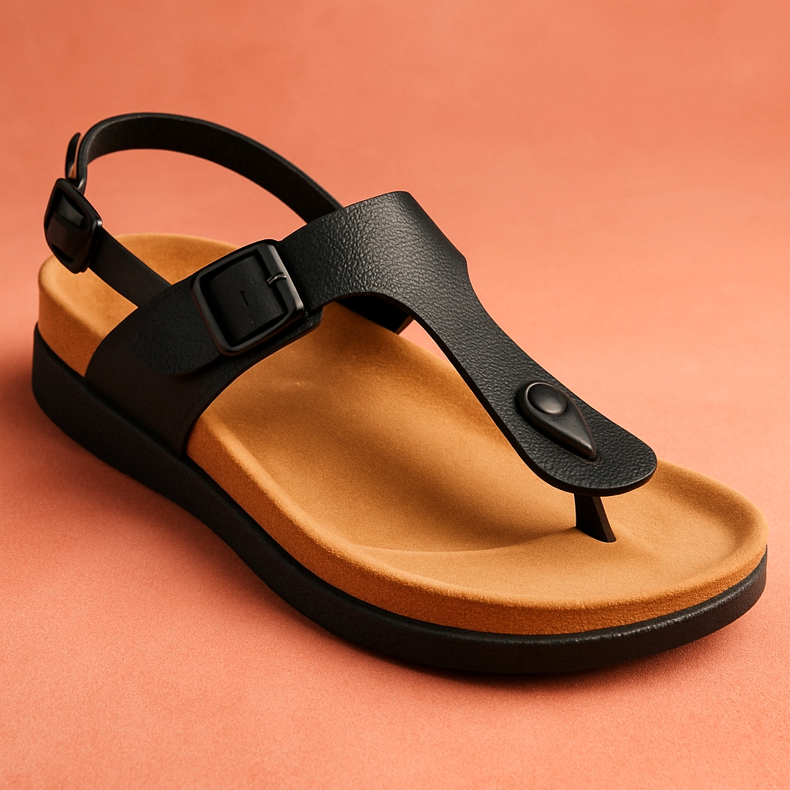
1. Profiled sole with arch support
Look for models with a clearly defined anatomical profile that supports the natural arch of the foot. Iconic ones work great here Birkenstock flip-flops with a cork, contoured insole.
2. Sufficient cushioning
The sole should be soft enough to absorb impacts when walking, but at the same time stable enough not to deform under the weight of the body.
3. Wide, soft strap
The wider the strap between the toes, the less risk of abrasion. The material should be soft (natural leather, nubuck, soft eco-leather) and not cause pressure.
4. Appropriate sole width
The foot should not protrude beyond the edges of the sole. Too narrow flip-flops cause instability and an increased risk of ankle sprains.
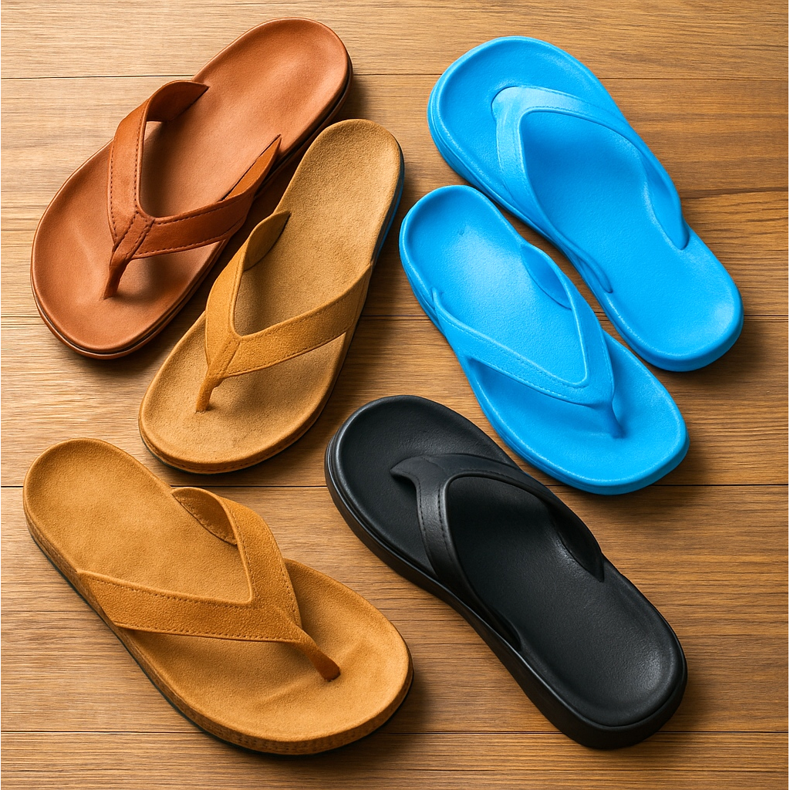
Foot-friendly materials
The choice of material is of great importance for the comfort and health of your legs:
Natural leather
The best option - it breathes, adapts to the foot, does not cause irritation. It becomes even more comfortable over time. Check leather slippers in our offer.
Natural cork
Perfect material for an insole - it breathes, has natural antibacterial properties, and perfectly cushions. It is also environmentally friendly.
EVA (ethyl acetate foam)
Light, flexible, well cushioned. It does not absorb water, so it is perfect for the pool or beach. EVA flip-flops it's a good choice for holidays.
Nubuck and suede
Soft, pleasant to the touch, does not cause abrasions. However, they require more care than smooth skin.
Materials to avoid:
Hard plastic (causes abrasions), poor quality synthetic leather (does not breathe, causes sweating), rubber without lining (too stiff).
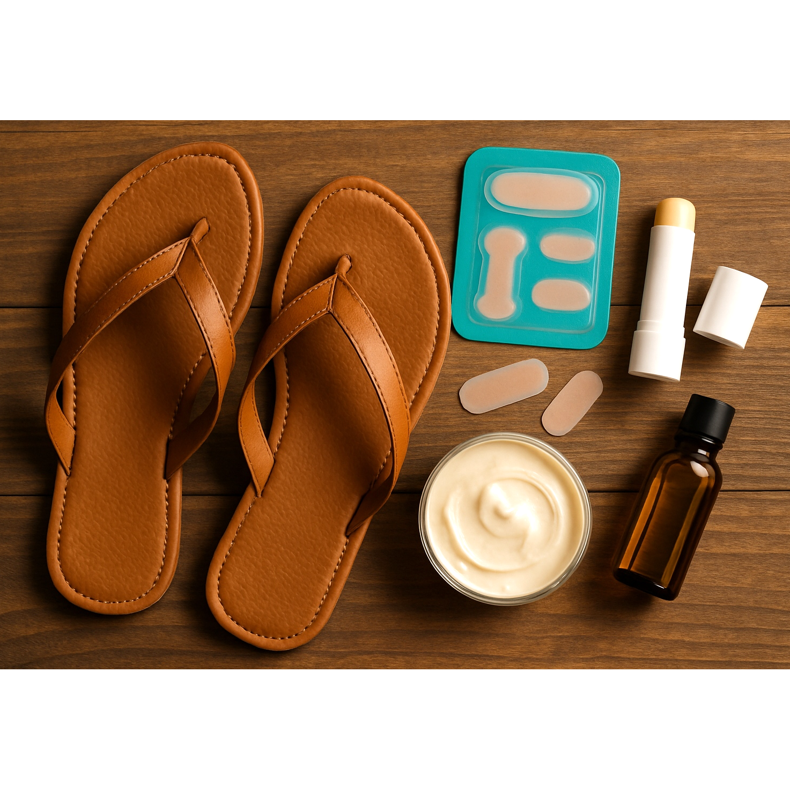
How to prevent chafing and blisters?
Even the best flip-flops can cause discomfort in the first days of wearing them. Here are proven methods:
Break in your new flip-flops gradually
On the first day, wear them for a maximum of 30 minutes. Gradually increase the wearing time by 15-30 minutes a day.
Use protective patches
Before putting on new flip-flops, apply special hydrocolloid patches to places that may rub (between the toes, on the top of the foot).
Use anti-chafing lotions
Use special preparations (e.g. with Vaseline) on critical points. They will create a protective layer between the skin and the material.
Soften the stripes
You can gently soften leather straps by rubbing leather conditioner or oil into them.
Wear them on dry feet
Wet skin is more susceptible to abrasions. After getting out of the water, dry your feet thoroughly before putting on your flip-flops.
Choosing flip-flops for your foot type
Each foot is different and requires an individual approach:
Flat feet
Strong support of the longitudinal arch is necessary. Choose orthopedic models with a clearly convex insole. Avoid completely flat flip-flops - they will only make the problem worse.
High instep
You need gentler support, but good cushioning. An insole that is too contoured will be uncomfortable. Check flip-flops with a subtle profile.
Wide feet
Look for models with adjustable straps or "wide fit" versions. Pay attention to whether the manufacturer offers different widths - some brands have such options.
Narrow feet
The problem with flip-flops is that the foot can "float" in a sole that is too wide. Choose models with adjustment or additional straps around the ankle for better stability.
Orthopedic problems
If you have halluxes, tendonitis, heel spur or other diseases - consult the choice of footwear with a podiatrist. You may need to order orthopedic insoles.
When is it better to give up flip-flops?
Although flip-flops can be comfortable, there are situations in which it is better to choose other footwear:
- Long walks - after an hour, the effort on the feet becomes too great, even in good orthopedic flip-flops
- Physical activity - running, playing football, cycling require footwear with better stabilization
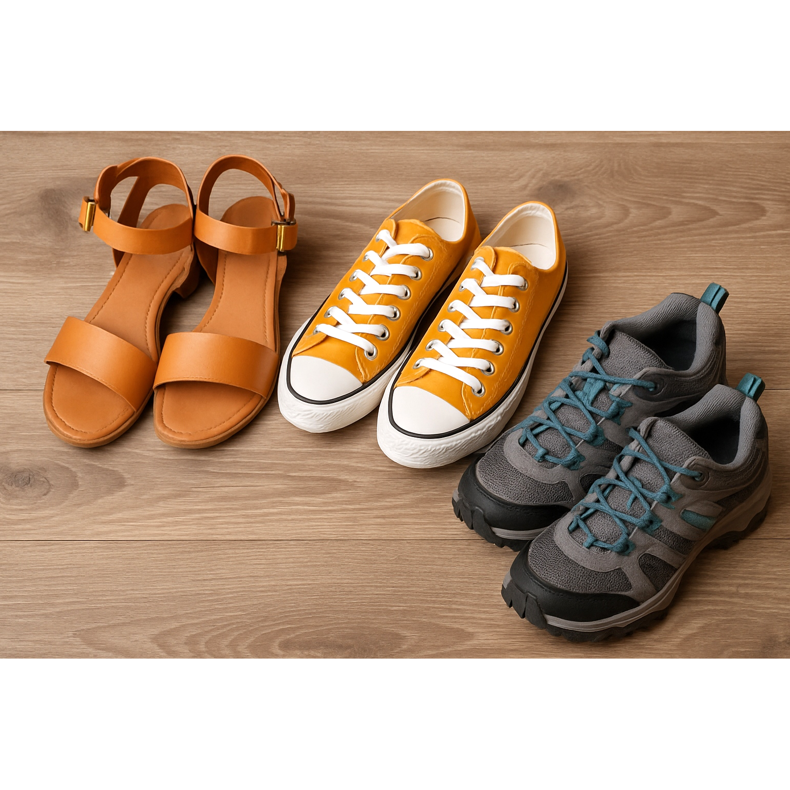
- Uneven terrain - mountains, rocky paths, forest - closed shoes with a good sole are needed here
- During pregnancy - changes in body weight distribution require shoes with better support
- With diabetes - people with diabetes should avoid exposed footwear due to the risk of unnoticed wounds
In such situations, choose sandals with better fastening or comfortable sneakers.
Taking care of your flip-flops is also about your feet's health
Clean footwear is the basis of foot hygiene. Bacteria and fungi thrive in a moist, warm environment, so regular care of your flip-flops is essential:
Cleaning
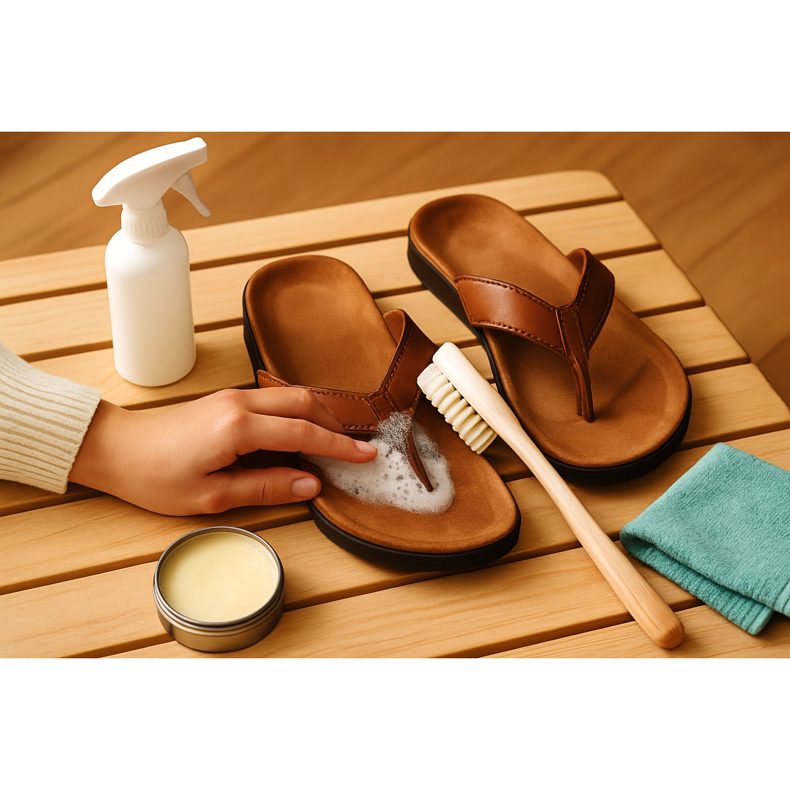
Wash your flip-flops with lukewarm water and soap every week. Wipe leather models with a damp cloth, plastic models can be immersed in water.
Drying
Never dry your flip-flops in the sun or near a radiator - the materials may become deformed. Leave them in a ventilated place, preferably with a crumpled newspaper inside.
Disinfection
Once a month, spray the inside of your flip-flops with an antibacterial agent or fill them with baking soda overnight (the baking soda will absorb unpleasant odors).
Leather maintenance
Lubricate leather flip-flops with an appropriate conditioner once every 2-3 weeks. Thanks to this, they will not crack and will last longer.
Well-groomed flip-flops ensure comfort and health of your feet all summer long!