
How to choose the color of shoes to match your outfit? The complete shoe color guide
Choosing the color of shoes is the basis of elegant styling. Learn how to match the color of your shoes to suits, jeans, chinos and accessories. Learn the rules, exceptions and common mistakes to avoid.
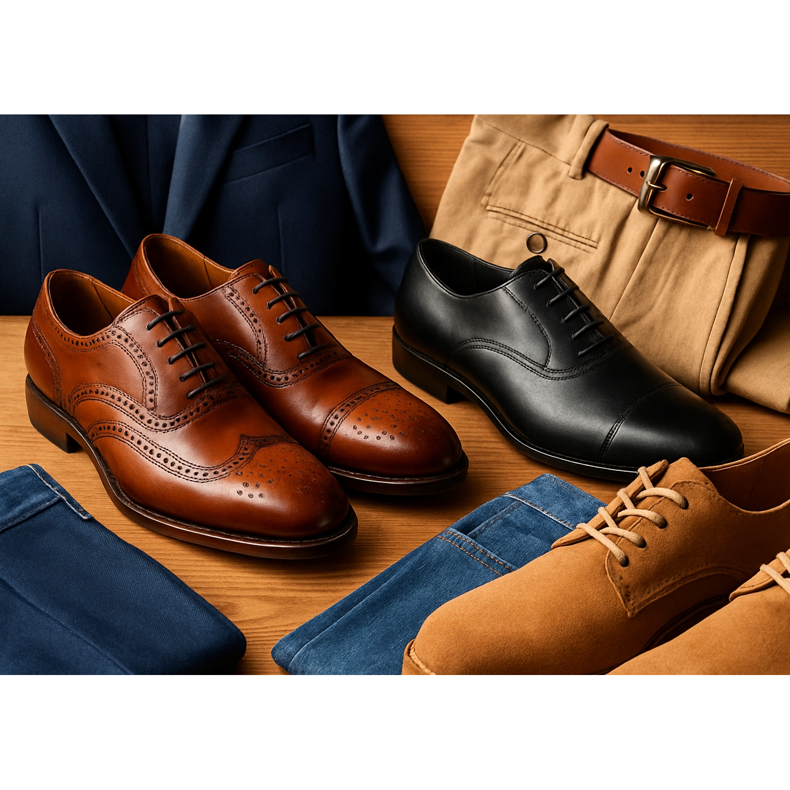
Why does the color of shoes matter?
The color of shoes is one of the most important elements of men's styling. Improperly chosen footwear can ruin even the best-tailored suit, while properly coordinated shoes can elevate the entire outfit.
While there are some universal rules (black shoes with a black suit), contemporary men's fashion offers more freedom and creativity. It's important to know the basics and understand when to break them.
In this guide, you will learn all the key rules for matching the color of shoes to trousers, suits and other styling elements.
Basic rules of color matching
Rule 1: The darker the pants, the darker the shoes
This is the basic rule - dark trousers require dark shoes. Light shoes with dark pants create an undesirable contrast and draw attention to your feet.
Rule 2: The color of the shoes should be at least as dark as the pants
It is rare to wear lighter shoes than trousers (except for very casual summer outfits).
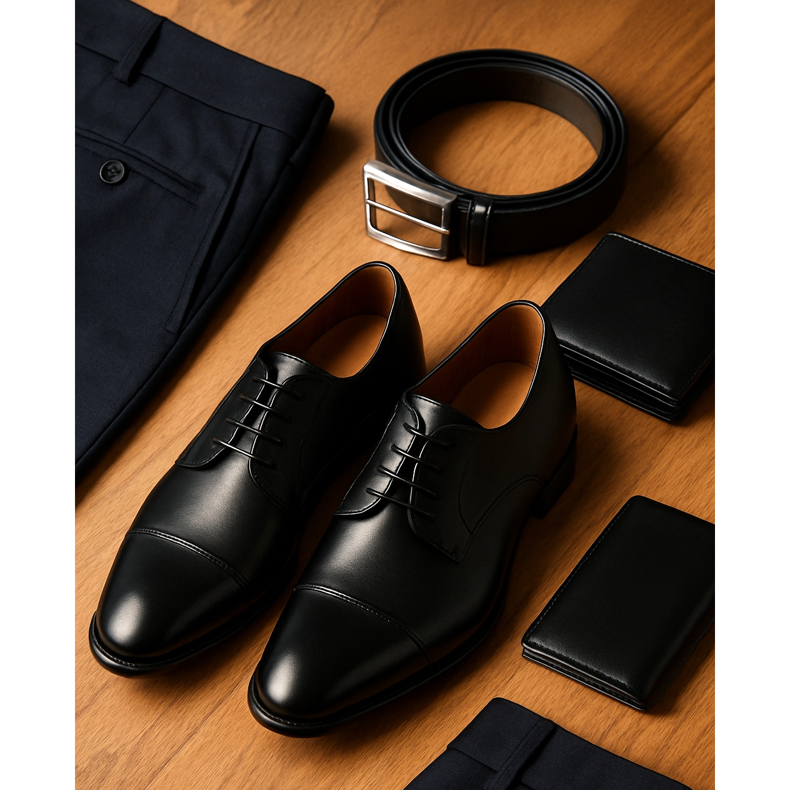
Rule 3: Match accessories
The shoes should be in the same color (or a similar shade) as the belt and possibly the wallet or briefcase. This creates consistency.
Rule 4: When in doubt, choose black or dark brown
These are the safest and most universal colors.
How to choose shoes for a suit?
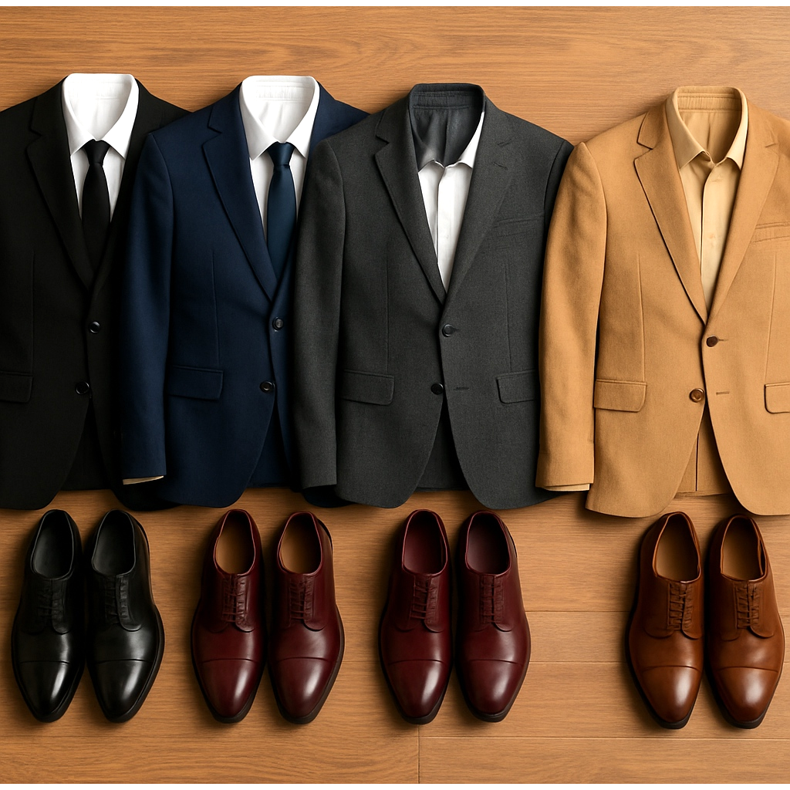
Black suit
✓ Black shoes (only correct option)
✗ Brown shoes (too much contrast, looks inelegant)
Navy blue suit
✓ Black shoes (classic, safest option)
✓ Dark brown shoes (elegant, less formal)
✓ Burgundy shoes (for the braver ones, very stylish)
✗ Light brown shoes (too casual)
Gray suit (dark)
✓ Black shoes (formal, classic)
✓ Dark brown shoes (elegant)
✓ Burgundy shoes (modern accent)
Gray suit (light)
✓ Brown shoes (perfect combination)
✓ Dark brown shoes
✓ Black shoes (more formal)
Brown/beige/caramel suit
✓ Brown shoes (match the shade - darker or the same)
✓ Burgundy shoes
✗ Black shoes (too strong contrast)
How to choose shoes for jeans and chinos?
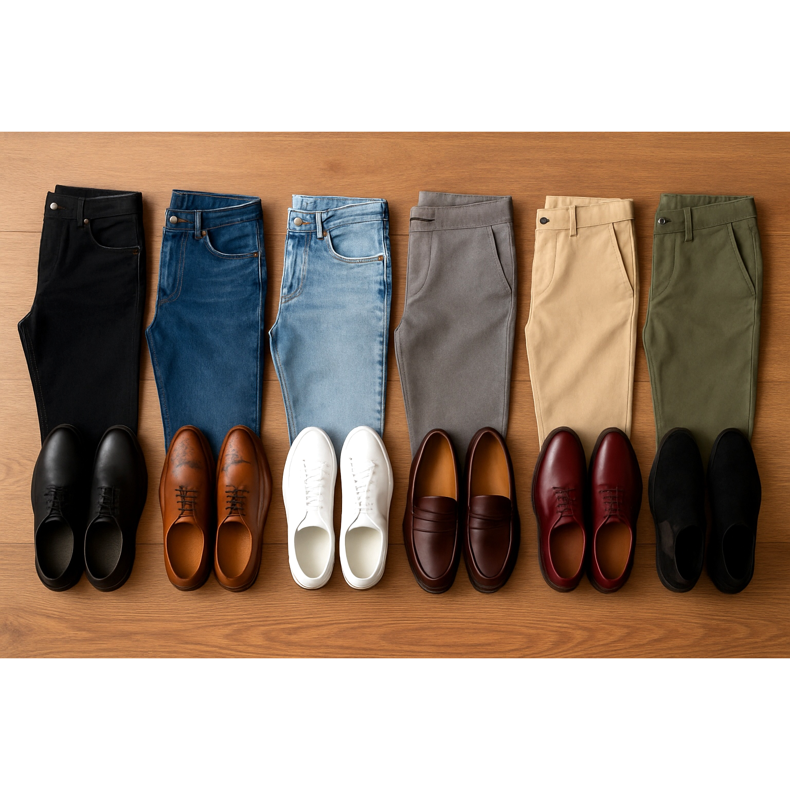
Black jeans
✓ Black shoes (sneakers, Chelsea boots, Derby)
✓ White sneakers (classic streetwear contrast)
○ Dark brown shoes (may work, but black is better)
Navy blue jeans (denim)
✓ Brown shoes (all shades)
✓ Black shoes
✓ White sneakers
✓ Burgundy shoes
→ The most universal pants - they match almost everything!
Light jeans (light blue)
✓ Brown shoes (light or medium)
✓ White sneakers
✓ Beige moccasins
○ Black shoes (the contrast may be too strong)
Gray trousers (chinos, wool)
✓ Brown shoes (perfect combination)
✓ Black shoes
✓ Burgundy shoes
Beige/khaki chinos
✓ Brown shoes (medium and dark shades)
✓ Burgundy shoes
✓ White sneakers
✗ Black shoes (too strong contrast, unless very casual)
Olive/green pants
✓ Brown shoes (best combination)
✓ Black shoes (more urban)
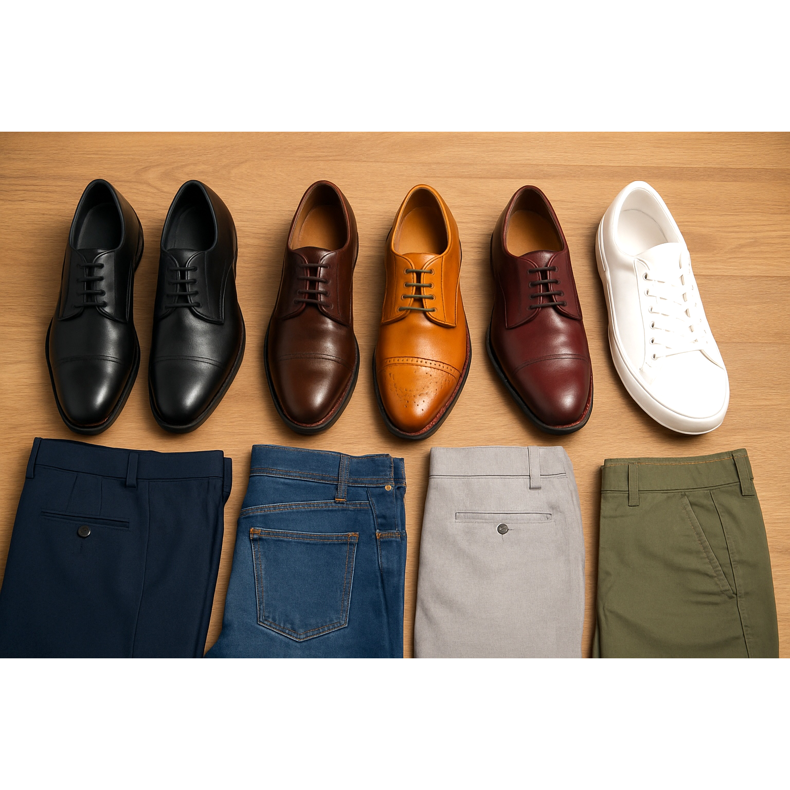
Which color of shoes is for what?
Black shoes
The most formal, universal, match:
✓ Black, navy blue, dark gray suit
✓ Black jeans
✓ Graphite, dark pants
✗ Light pants (beige, khaki, light jeans) - too strong a contrast
Dark brown shoes
Elegant, less formal than black, they match:
✓ Navy blue, gray suit
✓ Jeans (all shades)
✓ Chinos (gray, beige, olive)
✗ Black suit
Medium brown (tan, cognac)
Casual, warm, fits:
✓ Light jeans
✓ Beige, khaki chinos
✓ Light gray pants
✗ Formal suits
✗ Black pants
Burgundy shoes
Elegant, original, suitable for:
✓ Navy blue, gray suit
✓ Navy blue jeans
✓ Gray pants
✗ Black suit
✗ Beige pants (too many warm tones)
White sneakers
Casual, universal, fits:
✓ Jeans (all colors)
✓ Chinos
✓ Shorts
✓ Smart casual (even with a suit!)
✗ Formal suits
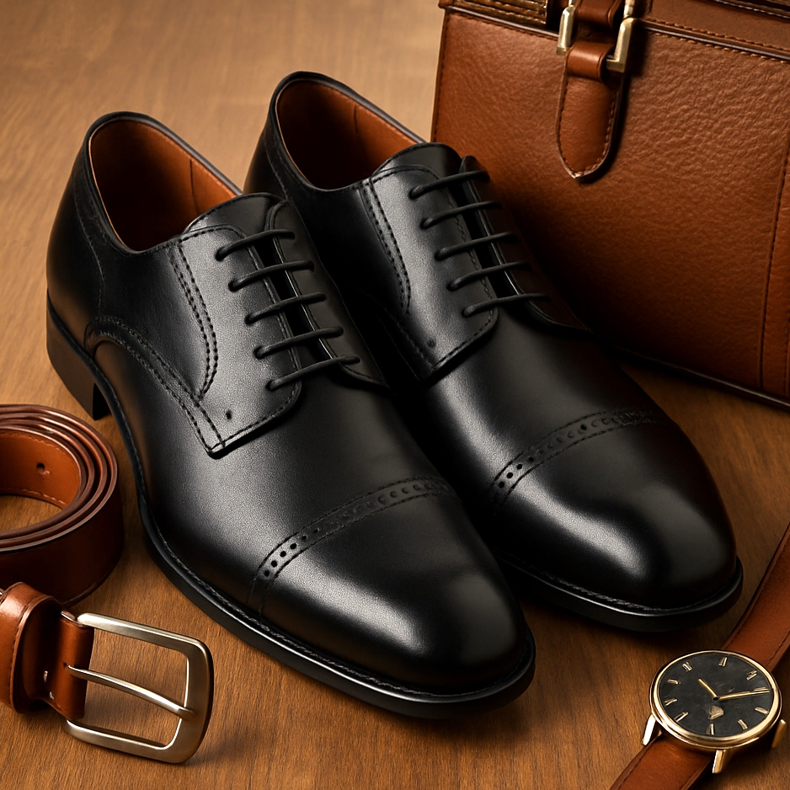
Matching shoes to accessories
1. Match your shoes to your belt
Black shoes = black belt, brown shoes = brown belt. This is the golden rule of dressing elegantly.
2. Match your shoes to your bag/briefcase
If you carry a leather briefcase or bag, it should be the same color as your shoes.
3. Match your shoes to your watch
The leather strap of the watch should be the same color as the shoes and belt.
4. Don't mix shades of brown
If you have dark brown shoes, don't wear a light brown belt - they look mismatched.
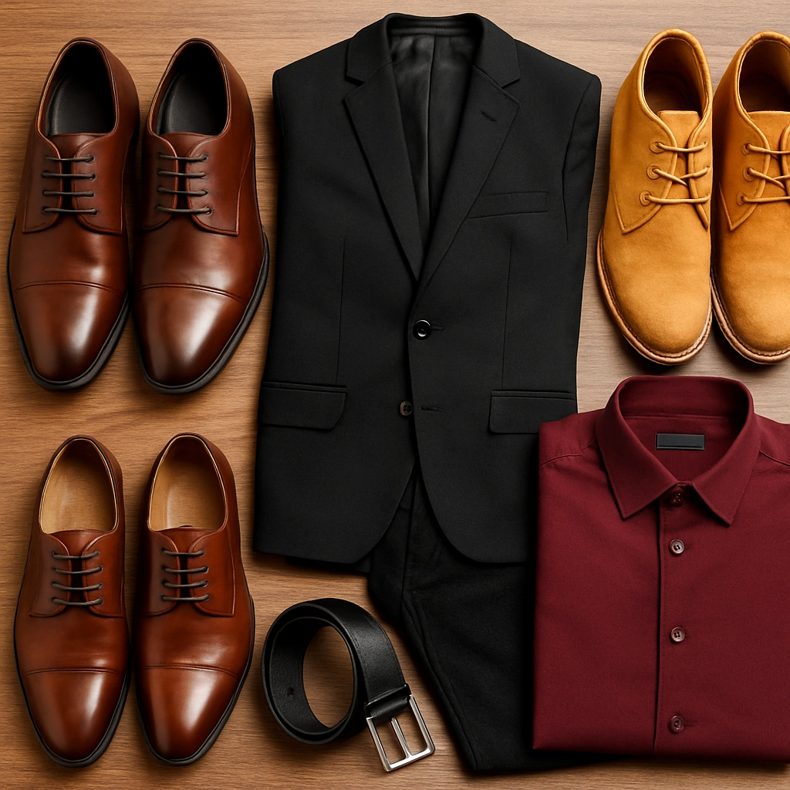
The most common mistakes when choosing the color of shoes
Mistake 1: Brown shoes with a black suit
This is the most common mistake. A black suit requires black shoes. No exceptions.
Mistake 2: Light shoes with dark pants
Tan boots with black jeans? NO. The contrast is too great and unsightly.
Mistake 3: Strap not fitting
Black shoes + brown belt = styling disaster. Always adjust.
Mistake 4: Too many colors at once
If you have burgundy shoes, avoid wearing a burgundy shirt and a burgundy tie in addition - it's too much.
Mistake 5: Ignoring the formality of the occasion
Light brown loafers are inappropriate for a formal wedding, even if the color theoretically matches the suit.
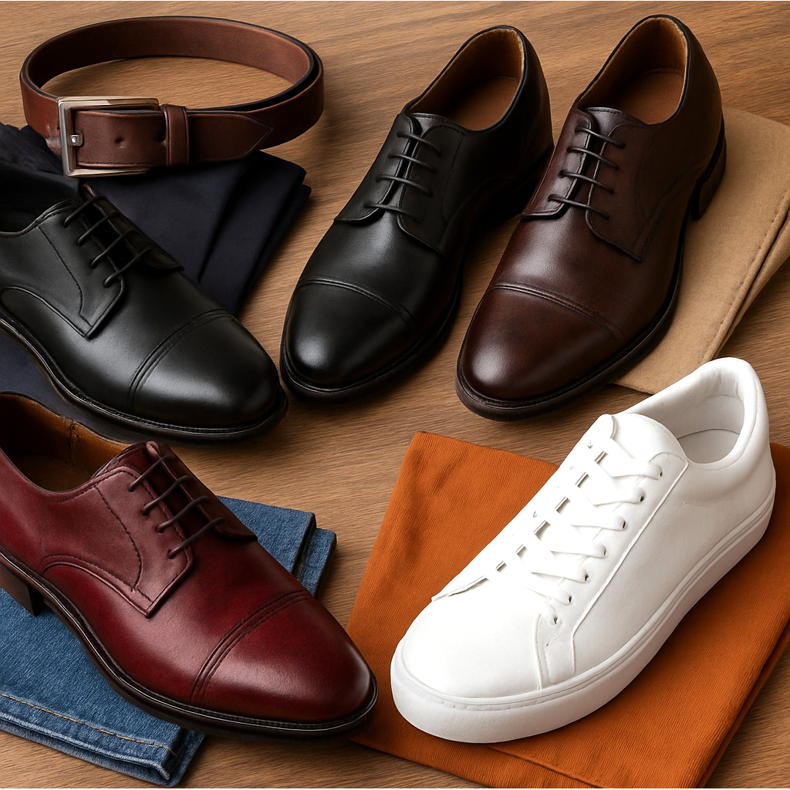
Summary
Selecting the color of shoes is an art that is based on a few simple rules: match the darkness of the shoes to the trousers, coordinate with the belt and accessories, avoid too strong contrasts in formal styles.
Black and dark brown shoes cover 90% of the needs. By adding burgundy shoes and white sneakers, you will be prepared for any occasion.
Remember: it's better to stay classic and confident than to experiment and feel insecure. Elegance is, above all, consistency.