
Ecological shoes - responsible fashion step by step
Conscious fashion is more than a passing trend - it is a lifestyle that increasingly influences our purchasing decisions, also when it comes to footwear. Ecological shoes combine care for the environment with modern design. Find out what the characteristics of sustainable footwear are, what to pay attention to when buying and how to wear eco shoes with pride.

What are eco shoes?
Ecological shoes are footwear that minimizes the negative impact on the environment at every stage of production. This includes the choice of materials, the manufacturing process, transportation and even the possibility of recycling at the end of use.
In practice, eco shoes can be made of organic materials (organic cotton, linen, hemp), recycled materials (recycled PET bottles, old tires, marine waste) or innovative leather substitutes (leather from mushrooms, pineapple, cactus). Soles are often made of natural rubber or recycled rubber.
Ethical production is also an important aspect - appropriate working conditions, fair remuneration and no exploitation of employees. Many ecological brands are certified to meet these standards, such as Fair Trade, GOTS or B Corp.

What to pay attention to when purchasing?
The ecological footwear market is growing, but unfortunately the phenomenon of greenwashing - i.e. apparent ecological marketing - is also growing. In order not to be fooled, it is worth paying attention to several elements.
Materials. Check what the shoes are made of. Reliable manufacturers precisely describe the composition of materials on the product page or on the label. Look for information on the percentage of recycled or organic materials.
Certificates. Reliable certificates are a good indicator. OEKO-TEX Standard 100 guarantees the absence of harmful chemicals, GOTS confirms the organic origin of cotton, and the Vegan certificate means the absence of ingredients of animal origin.
Durability. The most ecological shoes are those that last the longest. Choose well-made models made of durable materials, instead of cheap shoes that need to be replaced every season. Investing in quality is the most ecological purchasing decision.
Brand transparency. Check whether the manufacturer is openly communicating its practices – supply chain, carbon footprint, working conditions. Brands that have something to hide tend to avoid details.
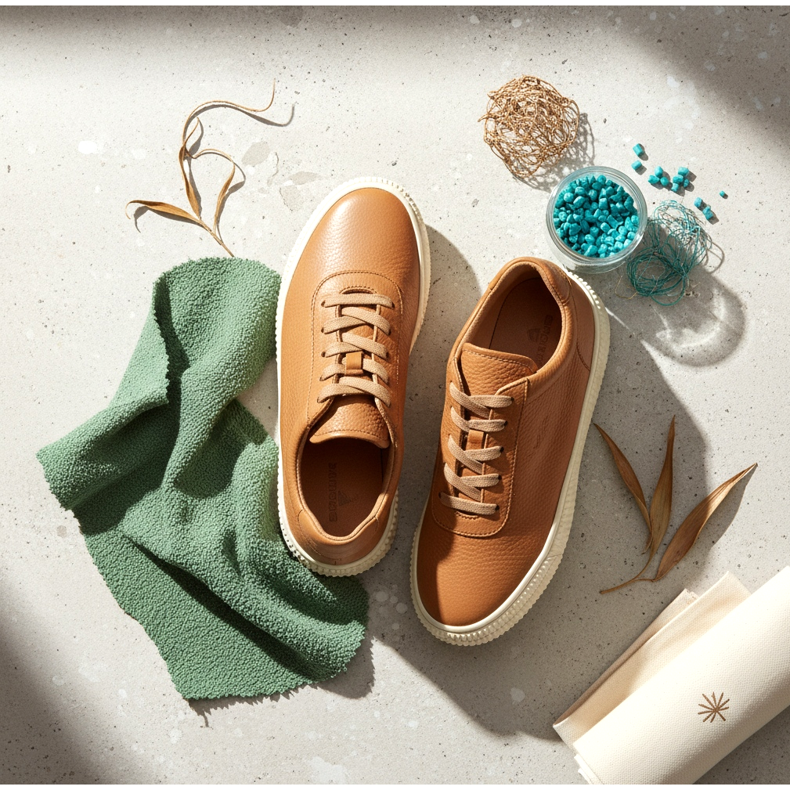
Eco-friendly materials - innovation overview
The footwear industry is experiencing a real material revolution. Here are the most interesting innovations that are changing the way shoes are produced.
Mushroom leather (Mylo). Produced from mycelium mycelium, it is soft, durable and biodegradable. It looks and performs like traditional leather, but its production uses less water and energy.
Piñatex (pineapple leather). Made from pineapple leaves, which are waste from agricultural production. The material is light, breathable and available in various colors and textures.
Recycled ocean plastic. Shoes made from ocean plastic are not science fiction - several big brands are already making sneakers from recycled marine plastic. Each pair means several dozen less PET bottles in the ocean.
Natural rubber. Natural rubber soles are biodegradable and offer great grip. Combined with an upper made of organic cotton, they create fully ecological footwear.
How to wear eco shoes with class?
Gone are the days when eco-friendly shoes were associated with boring designs and limited choices. Modern eco shoes are as stylish as their traditional counterparts, and often even more original.
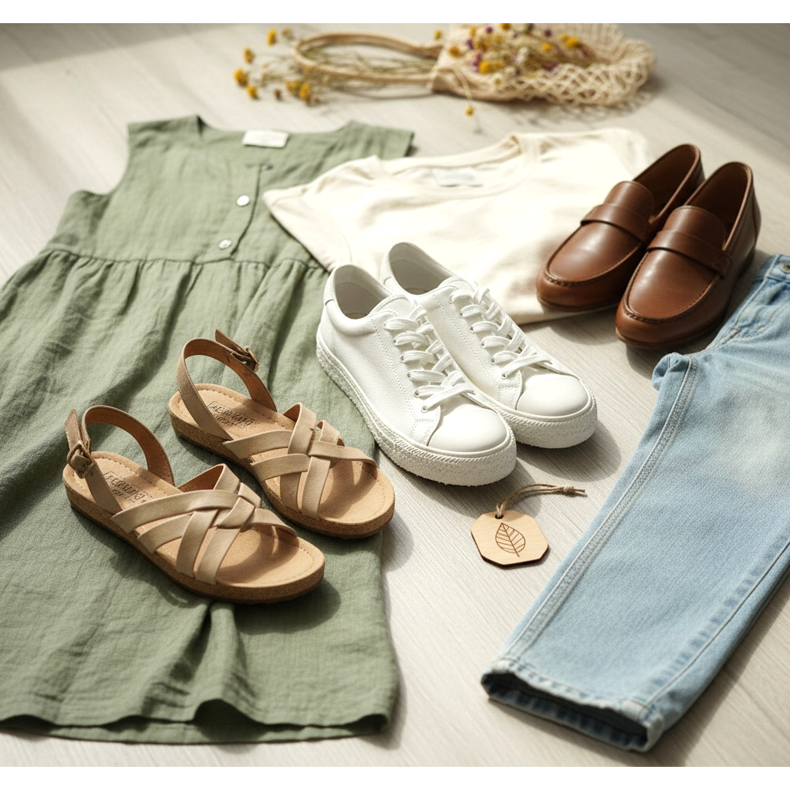
For everyday wear, choose minimalist sneakers made of recycled materials. White or beige models will perfectly complement jeans, chinos and dresses. Combine them with clothes made of natural fabrics - linen, organic cotton, hemp - to create a coherent, conscious styling.
For warmer days, choose sandals with a cork sole and straps made of natural or vegan leather. For the office, check out loafers or shoes made of ecologically tanned leather - the vegetable tanning process is much less harmful to the environment than traditional chrome tanning.
Wearing eco-friendly footwear is not only a matter of style, but also of value. Every conscious purchasing decision is a step towards a more sustainable future. You don't have to replace your entire wardrobe at once - start with one pair of eco-friendly shoes and see how easy it is to combine fashion with responsibility.